

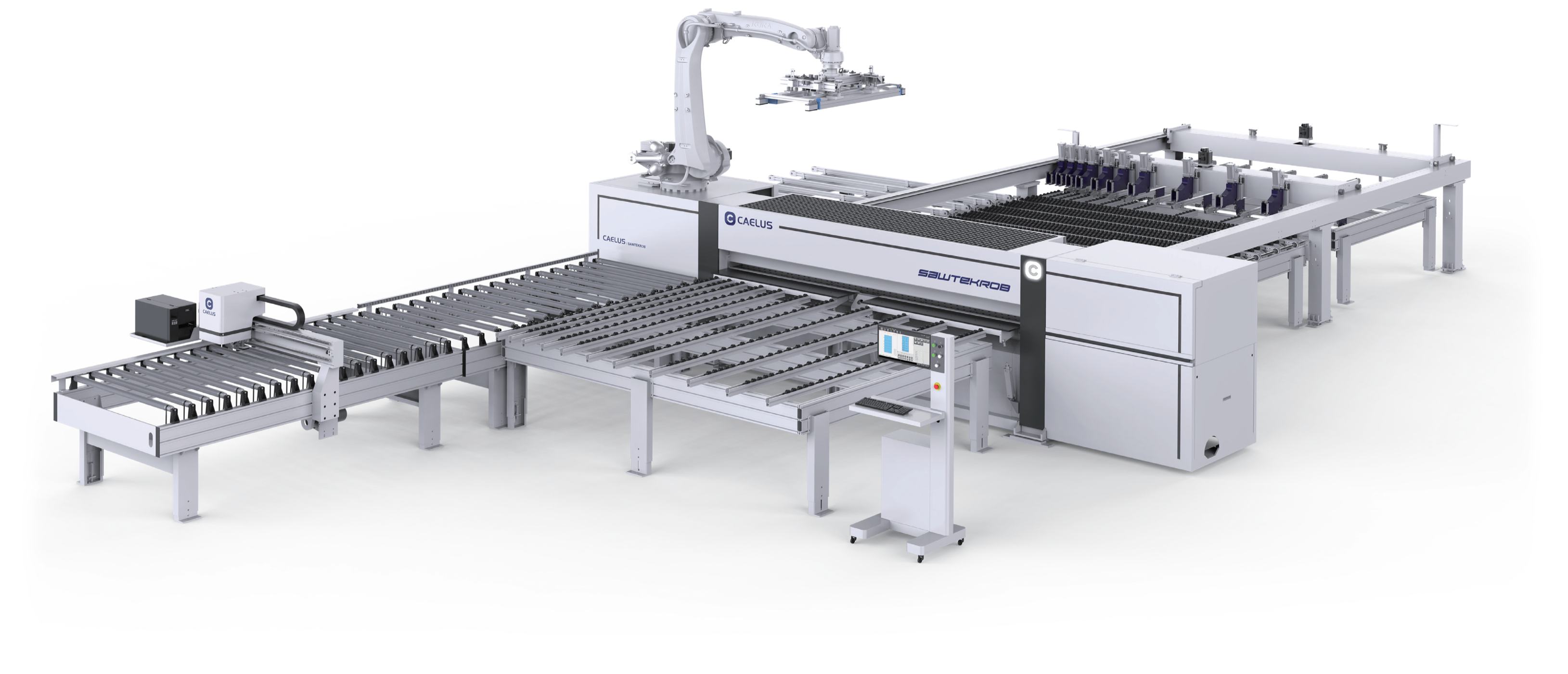
Choosing between a CNC panel saw and a manual panel saw is not simply a question of “manual or automatic.” It is a decision about production volume, cutting accuracy, labor cost, material waste, workshop layout, future growth, and long-term return on investment.
A manual panel saw can be a practical and affordable choice for small workshops, low-volume cutting, and simple sheet breakdown. A CNC panel saw, on the other hand, is built for manufacturers that need higher output, repeatable accuracy, reduced labor dependency, better material utilization, and a more digital production workflow.
If you manufacture cabinets, wardrobes, office furniture, custom panels, doors, or other panel-based products, this guide will help you understand the real difference between a CNC panel saw and a manual panel saw — and more importantly, which one fits your factory.
What Is a Panel Saw?
A panel saw is a woodworking machine used to cut large sheet materials into smaller parts with specific dimensions. It is widely used in furniture manufacturing, cabinet making, door production, wardrobe manufacturing, interior decoration, and panel processing.
Common materials cut by panel saws include:
- MDF
- Plywood
- Particle board
- Chipboard
- Melamine board
- Laminated board
- Veneer panels
- Plastic panels
- Acrylic panels
- Aluminum composite panels, depending on machine configuration
Panel saws are especially important in furniture production because cutting is usually the first major step before edge banding, drilling, grooving, assembly, and packaging. If the first cut is inaccurate, every downstream process becomes harder.
A small cutting error may lead to poor edge banding, misaligned drilling, uneven cabinet gaps, assembly problems, and customer complaints. This is why choosing the right panel saw is not only about cutting speed. It is about the quality and stability of the whole production process.
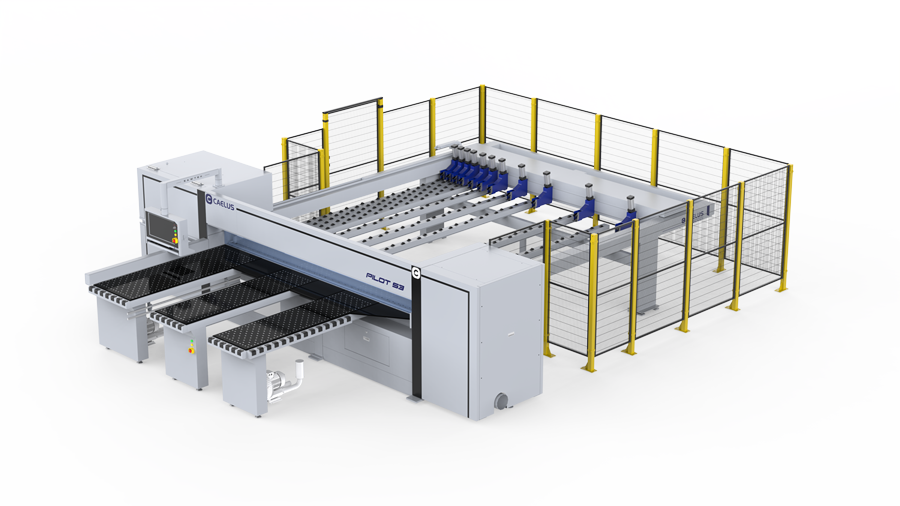
What Is a CNC Panel Saw?
A CNC panel saw is a computer-controlled panel cutting machine. CNC stands for Computer Numerical Control. In a CNC panel saw, the machine controls key cutting actions such as positioning, feeding, clamping, cutting sequence, and sometimes labeling or optimization.
Instead of manually measuring every panel, the operator can input or import a cut list. The machine then follows the programmed cutting dimensions and sequence. This helps reduce manual error and improve cutting consistency.
A CNC panel saw may include:
- CNC control system
- Servo feeding system
- Main saw blade
- Scoring saw blade
- Pressure beam
- Automatic grippers or clamps
- Air flotation table
- Cutting optimization software
- Touchscreen interface
- Barcode or label printing system
- Dust collection interface
- Front-loading or rear-loading structure
- Optional automatic loading system
A CNC panel saw is not only a faster saw. It is a more controlled way to manage panel cutting in modern furniture manufacturing.
Advantages of CNC Panel Saws
The main advantages of CNC panel saws are accuracy, repeatability, productivity, and workflow control.
Key benefits include:
- Higher cutting accuracy
- Better repeatability
- Faster batch cutting
- Reduced manual measuring errors
- Lower dependence on highly skilled operators
- Better material utilization with optimization software
- More stable cutting quality before edge banding
- Easier production planning
- Better support for custom furniture orders
- Easier integration with labeling, ERP, MES, or smart factory systems
For furniture factories, the value of a CNC panel saw is not only in how fast it cuts. The greater value is that it makes the cutting process more predictable.
Predictable cutting means fewer mistakes, fewer missing parts, fewer reworks, better assembly, and smoother delivery.
Limitations of CNC Panel Saws
A CNC panel saw is not the best choice for every workshop.
Common limitations include:
- Higher initial cost
- More requirements for space, power, air supply, and dust collection
- More technical maintenance than manual saws
- Operator training is required
- Software workflow must be managed properly
- Not always necessary for very low-volume shops
- Return on investment depends on real production volume
A CNC panel saw makes sense when the factory has enough cutting demand to justify automation. If a shop only cuts a few panels occasionally, the investment may not pay back quickly.
What Is a Manual Panel Saw?
A manual panel saw is a panel cutting machine where the operator controls most of the cutting process. The operator usually measures the panel, positions it, adjusts the fence or cutting head, pushes or guides the material, and checks the final dimensions.
Manual panel saws may include:
- Vertical panel saws
- Sliding table saws
- Basic horizontal panel saws
- Portable panel saws
- Semi-manual panel cutting machines
Manual saws are popular because they are simple, affordable, and relatively easy to maintain. For small workshops, they are often the first step into professional panel cutting.
Advantages of Manual Panel Saws
Manual panel saws still have a place in many workshops. They are not outdated when used in the right production environment.
Key advantages include:
- Lower initial investment
- Simple structure
- Easier maintenance
- Lower software dependency
- Flexible for occasional cutting
- Suitable for small workshops
- Good choice for low-volume production
- Easier for basic straight cuts
- Less training required for simple operation
For a small cabinet shop that cuts only a few panels per day, a manual panel saw may be completely sufficient. In this case, investing in a high-end CNC panel saw too early may not generate enough return.
Limitations of Manual Panel Saws
The main weakness of a manual panel saw is that performance depends heavily on the operator.
Common limitations include:
- Slower production speed
- Higher dependence on skilled workers
- More manual measuring and positioning
- Higher risk of cutting errors
- Lower repeatability in batch production
- More operator fatigue during long shifts
- Less integration with digital production systems
- More difficult cut list management
- Lower material optimization capability
A manual panel saw may produce good results when operated by a skilled worker. But when production volume increases, the process becomes harder to control. Fatigue, repeated measuring, inconsistent panel handling, and human error can slowly reduce productivity and profit.
CNC Panel Saw vs Manual Panel Saw: Main Differences
A CNC panel saw and a manual panel saw are both used to cut large sheet materials into smaller panels, but they are designed for different production levels. A manual panel saw relies on the operator to measure, position, feed, and cut the board. A CNC panel saw uses computer control to automate positioning, clamping, feeding, and cutting, making it better for high-volume, repeatable, and accuracy-sensitive production.
| Comparison Point | Manual Panel Saw |
|
| Control Method | Manually measured and operated by the worker | Controlled by CNC system and cutting program |
| Cutting Accuracy | Depends on operator skill and machine setup | More consistent due to automatic positioning |
| Productivity | Suitable for low-volume or occasional cutting | Better for batch cutting and daily production |
| Labor Requirement | Requires experienced manual operators | Reduces manual measuring and repeated adjustment |
| Material Utilization | Depends on manual planning | Can work with cutting optimization software |
| Safety | Operator works closer to the cutting process | Operator can stay farther from cutting actions |
| Initial Cost | Lower purchase cost |
|
| Long-Term Cost |
|
Can reduce labor cost, waste, and cutting errors |
| Best For | Small shops, simple cutting, limited budget | Cabinet factories, custom furniture, panel processing |
1. Control and Operation
The main difference is how the cutting process is controlled. A manual panel saw depends on the operator for measuring, positioning, feeding, and cutting. This works well for simple jobs, but it can become slow when many panels need to be processed.
A CNC panel saw uses a control system to manage cutting dimensions and sequences. The operator can input or import a cut list, and the machine handles positioning and cutting more automatically. This helps reduce repeated manual adjustment and human error.
2. Accuracy and Repeatability
Manual panel saw accuracy depends heavily on the operator’s experience, measuring method, blade condition, and machine alignment. Skilled operators can achieve good results, but consistency becomes harder during long shifts or batch production.
A CNC panel saw is built for repeatable accuracy. Automatic positioning, stable clamping, and programmed cutting help keep dimensions consistent from one panel to the next. This is especially important before edge banding, drilling, and cabinet assembly.
3. Productivity and Labor Cost
Manual panel saws are practical for small workshops and low-volume work. However, every cut requires manual setup, checking, and handling.
CNC panel saws are more efficient when cutting many panels every day. They reduce manual measuring time, improve workflow, and help factories process more orders with fewer cutting errors. For growing furniture manufacturers, this can lower the cost per finished panel over time.
4. Material Waste and Optimization
With manual cutting, material use depends largely on the operator’s planning. For simple jobs, this may be enough. But for custom furniture orders with many different part sizes, manual planning can lead to more waste.
A CNC panel saw can work with cutting optimization software to improve sheet layout, reduce offcuts, and make better use of expensive boards. This is one of the key reasons many furniture factories upgrade from manual cutting to CNC cutting.
5. Which One Should You Choose?
Choose a manual panel saw if you have a small workshop, limited budget, low daily cutting volume, and simple cutting requirements.
Choose a CNC panel saw if you need higher output, repeatable accuracy, lower labor dependency, better material utilization, and a production workflow that can support future growth.
The best choice is not simply the cheaper machine. It is the machine that gives you the lower cost per finished panel and supports your production goals.
Application Scenarios: Which Saw Fits Your Factory?
Different factories need different cutting solutions.
Small Woodworking Workshop
Recommended option: Manual panel saw or sliding table saw
A small workshop with low daily output may not need full CNC automation. If most jobs are simple and the operator is experienced, a manual panel saw can be cost-effective.
Best for:
- Small furniture repair shops
- Low-volume cabinet shops
- Interior decoration workshops
- Occasional panel cutting
- Budget-sensitive buyers
Growing Cabinet Shop
Recommended option: Entry-level CNC panel saw or semi-automatic panel saw
A growing cabinet shop often handles repeated cabinet parts, door panels, side panels, shelves, and custom dimensions. At this stage, manual cutting may become slow and error-prone.
Best for:
- Cabinet manufacturing
- Kitchen furniture
- Wardrobe production
- Custom shelving
- Small-to-medium batch orders
Custom Furniture Factory
Recommended option: CNC panel saw with optimization software
Custom furniture production often involves many sizes, many orders, and frequent changes. CNC panel saws help manage this complexity by using cut lists, optimized cutting patterns, labels, and repeatable workflows.
Best for:
- Whole-house customization
- Wardrobe factories
- Office furniture
- Hotel furniture
- Modular furniture
Large Furniture Manufacturer
Recommended option: CNC panel saw line or CNC beam saw system
Large manufacturers need speed, automation, batch cutting, and data integration. They may require rear loading, automatic loading, labeling, sorting, and connection with ERP or MES systems.
Best for:
- Large-scale panel processing
- Mass furniture production
- Standardized cabinet parts
- High daily sheet volume
- Automated production lines
Common Buying Mistakes
1: Only Comparing Machine Price
The cheapest machine may become expensive if it causes downtime, poor cutting quality, high waste, or weak service support.
Compare total cost of ownership, not only purchase price.
2: Buying Too Small for Future Growth
A machine that fits today’s production may become a bottleneck next year. If your order volume is growing, choose a machine with enough capacity for future demand.
3: Ignoring Material Type
Different materials require different blades, speeds, scoring settings, and clamping methods. Always confirm whether the machine can handle your real materials.
4: Forgetting Dust Collection
Poor dust extraction affects cutting quality, machine life, operator health, and factory cleanliness. Dust collection should be considered before installation.
5: Not Checking After-Sales Support
For overseas buyers, after-sales service is critical. Ask about spare parts, remote diagnosis, training videos, English manuals, software support, and response time.
6: Expecting CNC to Solve Every Problem
A CNC panel saw improves cutting, but it cannot fix poor production planning, bad material storage, weak downstream capacity, or untrained operators. Automation works best when the whole workflow is organized.
Why Choose Caelus CNC Panel Saw Solutions?
Caelus focuses on intelligent panel processing solutions for modern furniture manufacturing. For factories moving from manual cutting to automated production, Caelus provides CNC panel saw solutions designed for accuracy, efficiency, stability, and production scalability.
Caelus panel saw solutions can support different production needs, from entry-level precision cutting to high-efficiency automated panel processing. Depending on your application, Caelus can help evaluate the right configuration based on your panel size, material, production volume, automation needs, and factory layout.
A suitable CNC panel saw should not only cut panels. It should help your factory build a more reliable cutting workflow.
With Caelus, buyers can discuss:
- CNC panel saw selection
- Furniture factory cutting solutions
- Panel processing line planning
- Cutting accuracy requirements
- Software and optimization needs
- Front-loading or rear-loading workflow
- Upgrade from manual cutting
- Smart factory integration
If you are not sure whether your factory needs a manual panel saw, CNC panel saw, or automated panel processing line, Caelus engineers can help you compare options based on real production data.
Conclusion
Choosing between a CNC panel saw and a manual panel saw depends on your production goals. Manual panel saws are affordable and practical for small workshops, simple cuts, and low daily volume. CNC panel saws are better for factories that need higher accuracy, faster batch cutting, less labor dependency, improved material use, and a scalable digital workflow. If cutting quality, waste, and delivery speed affect your profit, a CNC panel saw is usually the smarter long-term investment.
FAQ
Q1. Is a CNC panel saw better than a manual panel saw?
A: A CNC panel saw is better for high-volume production, repeatable accuracy, and factory automation. A manual panel saw is better for small workshops, simple cutting jobs, and lower budgets.
Q2. Is a CNC panel saw worth it for a small workshop?
A: It depends on your daily cutting volume. If your workshop cuts only a few panels occasionally, a manual panel saw may be enough. If cutting errors, labor cost, or slow production affect your orders, an entry-level CNC panel saw may be worth considering.
Q3. How much does a CNC panel saw cost?
A: The cost of a CNC panel saw depends on cutting size, automation level, software, loading method, and machine configuration. Buyers should also consider shipping, installation, training, blades, dust collection, spare parts, and after-sales support.
Q4. What materials can a CNC panel saw cut?
A: A CNC panel saw can cut common panel materials such as MDF, plywood, particle board, chipboard, melamine board, laminated board, veneer panels, acrylic panels, and some composite panels, depending on the blade and machine configuration.