


In the competitive landscape of modern furniture manufacturing, details determine success. Once the panel cutting process is complete, the step that truly breathes "life" and "durability" into a piece of furniture is—without a doubt—edge banding.
Countless furniture factory owners face a core dilemma when upgrading their production lines: Should they opt for a cost-effective semi-automatic edge bander, or take the leap into the era of fully automatic edge banding machines? Edge banding quality directly impacts the aesthetic appeal and moisture resistance of the finished product, while the level of automation in your edge bander directly dictates your factory's production efficiency and labor costs.
Today, we will conduct an in-depth comparison of the differences between semi-automatic and fully automatic equipment. By aligning these insights with the practical demands of panel processing, we aim to help you make the most informed investment decision.
What is an Edge Banding Machine?
Edge banding machines are specialized pieces of equipment designed to securely bond edge banding materials—such as PVC, ABS, wood veneer, or solid wood strips—to the exposed edges of panel materials.
Within the panel processing workflow, the edge bander serves as a critical post-processing stage. It not only conceals the rough internal structure of engineered wood panels but also significantly reduces formaldehyde emissions by sealing the edges, while simultaneously preventing moisture ingress that could lead to panel swelling. Whether for straight-line edging or complex curved processing, a stable and reliable machine serves as the cornerstone of high-quality furniture production.
Semi-Automatic Edge Banding Machines
How They Work
Semi-automatic machines typically require manual feeding of materials, or manual assistance to complete specific processing stations. While they possess basic gluing and edge-application capabilities, subsequent steps—such as end trimming and edge trimming—often necessitate manual intervention or secondary processing.
Advantages and Limitations
Advantages: Extremely low initial investment cost, compact footprint, and relatively flexible operation.
Disadvantages: Low production efficiency, and heavy reliance on the operator's skill level. Due to the high degree of manual involvement, edge banding consistency tends to be poor; consequently, these machines often become a production bottleneck when faced with high-volume orders. IV. Fully Automatic Edge Banding Machines
As a standard fixture in modern manufacturing facilities, the fully automatic edge banding machine achieves complete process automation—from material feeding to the finished product.
Core Workflow
Once a panel enters the machine, the equipment automatically executes the entire sequence: pre-milling (to remove saw marks), glue application, edge banding, pressing, end trimming, rough trimming, fine trimming, profile tracing (chamfering), edge scraping, and polishing.
Why Is It the Choice of the Future?
High Efficiency: Feed speeds can reach 20 meters per minute or even higher, supporting continuous 24-hour operation.
Consistent Quality: All processes are controlled by high-precision servo systems, ensuring that the edge banding finish on every single panel is perfectly uniform.
Cost Reduction: Although the initial investment in the machine is significant, it can replace the labor of 3 to 5 skilled woodworkers, resulting in an exceptionally high long-term Return on Investment (ROI).
Semi-Automatic vs. Fully Automatic Edge Banding Machines: A Comparison
To provide you with a clear overview at a glance, we have compiled the following core comparison table:
Table 1: Technical Comparison Matrix
|
Feature |
Semi Automatic |
Fully Automatic |
|
Automation Level |
Low (Manual feeding) |
High (Full sequence) |
|
Production Speed |
5-10 m/min (Inconsistent) |
15-42 m/min (Stable) |
|
Labor Dependency |
High (Requires skilled labor) |
Low (Operator only) |
|
Quality Consistency |
Variable |
Excellent |
|
Panel Processing Integration |
Standalone only |
Smart Factory / MES Ready |
|
Initial Investment |
Budget-friendly |
Premium |
Processing Capabilities for Thick Edges: A Comparison
In high-end furniture manufacturing, the use of "thick edges" (typically referring to edge banding strips ≥ 2mm in thickness) is becoming increasingly widespread. This technique delivers a smoother, more rounded chamfered effect, providing a visual texture that closely mimics solid wood.
Processing Challenges
Thick edge banding materials are relatively hard and possess high elastic recoil. Semi-automatic machines often struggle with insufficient pressure and weak bonding, while manual edge trimming frequently leaves behind unsightly tool marks.
The Advantages of Automation
Fully automatic edge banders are equipped with heavy-duty pressure roller systems and high-frequency trimming motors, utilizing multiple pressure rollers to ensure that thick edge strips adhere perfectly. Caelus’s high-performance edge banding machines even support the automatic switching between edge strips of different thicknesses—a distinct advantage when manufacturing high-end custom furniture.
How to Choose the Right Edge Banding Machine for You?
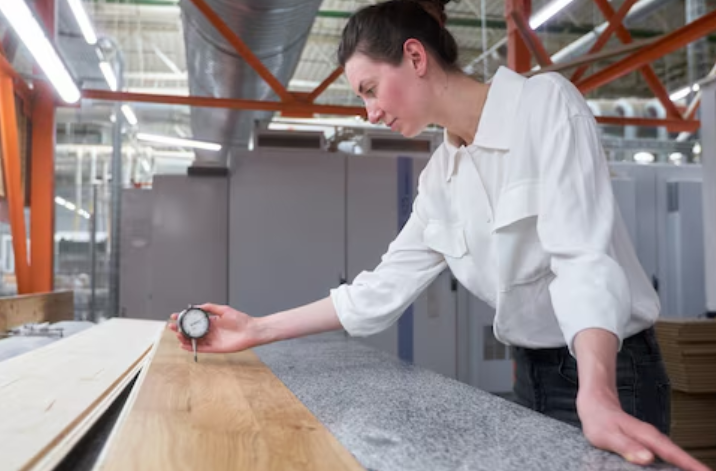
When selecting equipment, you should not focus solely on price, but rather on your broader business blueprint:
Production Scale: If you process more than 100 panels per day, a fully automatic machine is the only viable choice.
Product Positioning: Are you manufacturing high-end cabinetry or office furniture? You must utilize an automatic edge banding machine to ensure "zero glue lines" and flawless chamfering results.
Future Automation Planning: Does your factory plan to introduce CNC panel-cutting equipment? Caelus’s fully automatic edge banders integrate seamlessly with automated panel processing production lines, enabling complete data connectivity.
Why Choose Caelus Edge Banding Solutions?
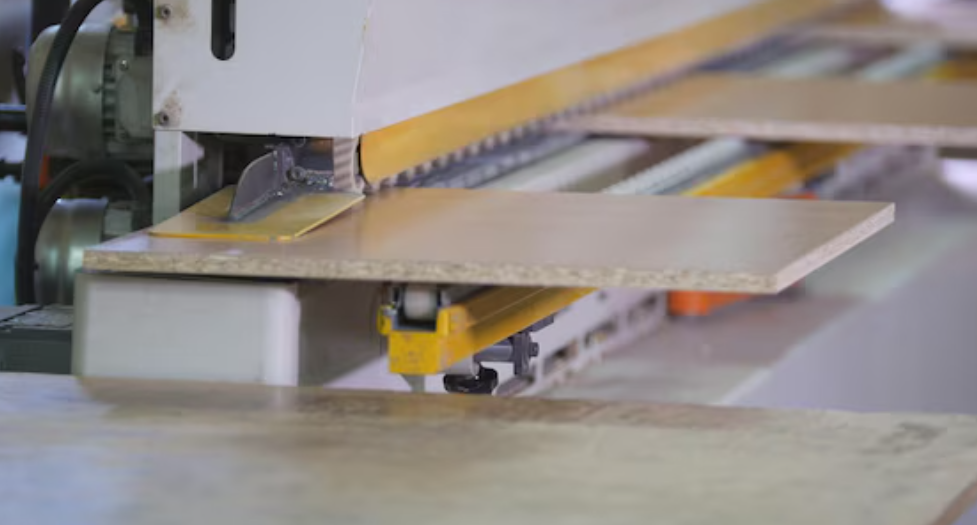
Among the many suppliers of edge banding machines, Caelus stands out thanks to its deep understanding of the furniture manufacturing industry.
An analysis of the Caelus product line reveals that its equipment features not only high-precision mechanical structures but is also infused with intelligent technology:
Aurora Series: Driven by linear motors, this series achieves processing speeds of up to 42 m/min, making it an indispensable tool for large-scale industrial production.
Pilot Series: Balancing stability with cost-effectiveness, this series is the preferred choice for medium-sized custom furniture factories looking to upgrade their automation capabilities.
Process Adaptability: Caelus equipment offers perfect support for EVA, PUR, and even laser edge banding technologies, effortlessly handling the processing requirements of various complex, thick edge bands.
Table 2: Caelus Edge Bander Series Overview
|
Series |
Best For |
Key Highlight |
|
Pilot Series |
SMBs / Custom Shops |
Compact, intelligent control, high stability |
|
Aurora Series |
Industrial Mass Production |
Linear drive, ultra-high speed (42 m/min) |
|
Bespoke Solutions |
Smart Factories |
Fully integrated with MES and Robot handling |
FAQ
Q1: What is the biggest difference between semi-automatic and fully automatic edge banding machines?
The primary difference lies in "continuity." Fully automatic models can complete every step—from glue application to final polishing—within a single continuous cycle, whereas semi-automatic models require manual intervention for subsequent trimming and finishing.
Q2: Is investing in a fully automatic edge banding machine worth it?
Absolutely. With rising labor costs, fully automatic equipment not only boosts production capacity but also significantly reduces rework rates. Typically, the investment can be recouped within 12 to 18 months through savings on labor and material costs.
Q3: Can semi-automatic machines handle thick edge bands (over 2mm)?
They can process them, but the quality of the result is difficult to guarantee. Thick edge bands are rigid; without the heavy-duty pressure beams and automatic contour trimming capabilities found in fully automatic machines, the edges are prone to issues such as delamination or uneven trimming.
Q4: How do Caelus edge banders improve panel processing efficiency?
Caelus equipment supports intelligent parameter presets and the automatic switching of edge banding strips of various sizes, thereby minimizing downtime during production changeovers. Furthermore, it can be seamlessly integrated with automated loading systems to achieve a "floor-free" production workflow.
Conclusion
For furniture manufacturing enterprises committed to long-term growth, automation is no longer an option—it is a necessity.
While semi-automatic edge banding machines may appear more attractive in terms of initial investment, when evaluated against long-term production stability, the quality of thick-edge processing, and compatibility with fully automated panel processing lines, the automatic edge banding machine emerges as the ultimate destination for upgrading furniture manufacturing operations. Partnering with a company like Caelus—which specializes in intelligent manufacturing—will ensure you maintain a decisive lead amidst fierce market competition.