

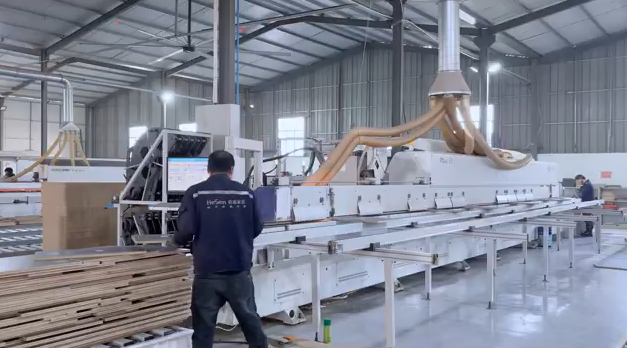
Decades ago, traditional woodworking relied heavily on manual labor: low efficiency, high errors, and material waste. Today, CNC (Computer Numerical Control) has revolutionized furniture manufacturing with high precision and full automation.
What Is CNC in Woodworking?
Basic Concepts of CNC
CNC stands for Computer Numerical Control. It integrates a digital control system into woodworking machinery, enabling fully automated, precise operation through pre-programmed commands—replacing manual operation for cutting, drilling and machining.
Core Features of CNC Woodworking
- High Precision: Eliminates manual errors with positioning accuracy up to 0.1 mm.
- Full Automation: Runs automatically after importing design files, no manual intervention required.
- High Consistency: Delivers stable dimensions and quality for mass production.
- Flexible Production: Supports both large-scale standard production and customized furniture manufacturing.
The Role of CNC in Furniture Manufacturing
CNC in Furniture Manufacturing
The Role of CNC in Furniture Manufacturing
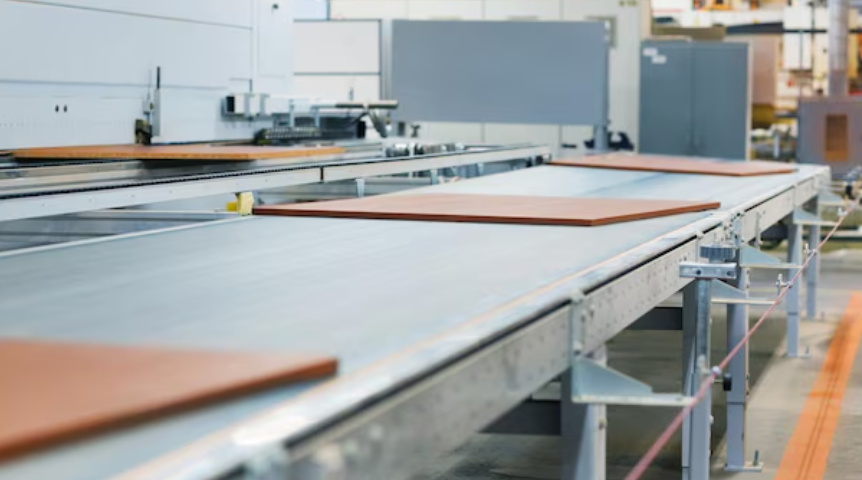
In today’s competitive market, CNC technology delivers cost reduction and efficiency improvement. It replaces labor-intensive manual work, greatly increases productivity, minimizes material waste, and eliminates human errors for consistent, high-quality production.
Common CNC Woodworking Equipment
Modern smart factories rely on high-performance CNC machines working in sync. As a leading intelligent equipment provider, Caelus offers complete solutions for core woodworking machines:
CNC Panel Saw
The essential first step in panel processing. It performs high-precision, high-efficiency cutting on wood-based panels. With optimized nesting software, it maximizes material usage. Caelus CNC panel saws feature a robust frame and precision servo control, delivering smooth, clean cuts even at high speed.
Edge Banding Machine
Edge banding protects panels from moisture, reduces formaldehyde release, and improves appearance. It automatically completes gluing, trimming, scraping, and polishing. Caelus high-speed edge banding machines achieve seamless edging and greatly improve furniture durability.
Panel Storage System (Intelligent Warehouse)
A key component for factory efficiency. It automatically stores, manages, and transports panels to production lines based on schedules. Caelus intelligent storage integrates closely with CNC saws, reduces waiting time, and supports fully automated unmanned production.
CNC Router / Machining Center
Ideal for drilling, grooving, engraving, and irregular shape cutting. With automatic tool change, it completes complex processing in one station. It is the core equipment for custom furniture and cabinet door production.
A Comprehensive Analysis of the CNC Panel Processing Workflow
CNC Panel Processing Workflow
In modern furniture production, efficiency depends not on individual machines, but on a fully integrated CNC panel processing line.
Powered by Caelus’s intelligent ecosystem, the automated closed-loop workflow includes:
- Automated Loading: The intelligent storage system receives ERP orders, and robotic arms deliver panels to the cutting station.
- Precision Cutting: The CNC panel saw processes data automatically and cuts panels to exact sizes.
- Automated Edge Banding: Panels are conveyed to the edge bander, which applies seamless edging on all four sides.
- Post-Processing: Panels move to a six-sided drilling machine or machining center for accurate hinge and connector drilling.
Key Benefits: Zero manual panel handling, full data continuity, 80% reduction in labor, and faster production cycles — the ideal model for smart factory profitability.
Why is CNC Woodworking the Trend of the Future?
Why CNC Automation Is the Future of Furniture Manufacturing
Irreversible Automation Trend
Global aging, labor shortages, and rising labor costs make machine replacement a necessity for factories to survive.
Booming Custom Furniture Market
Consumers demand personalized, diversified, and whole-house customized furniture. Only CNC systems enable flexible, non-standard, small-batch production.
Data-Driven Smart Production
CNC integrates with ERP and MES systems to realize full digital tracking: order management, scheduling, processing, and real-time production monitoring.
2026 Woodworking CNC Industry Trends
- Fully Automated Smart Factories: Deep integration of storage, cutting, and edge banding with IoT real-time data interaction.
- AI-Optimized Nesting: AI maximizes material usage, reduces tool wear, saves energy, and optimizes delivery.
- Lights-Out Manufacturing: 24/7 unmanned production for higher equipment efficiency.
- Full-Line Solution Providers: One-stop integrated solutions (like Caelus) deliver higher synergy and system-level efficiency.
CNC Woodworking vs. Traditional Woodworking
To provide a more intuitive illustration of the disparity between the two approaches, we have summarized the following key comparative data points:
| Feature Category | CNC Woodworking | Traditional Woodworking |
| Processing Precision | High | Low |
| Production Efficiency | High | Low |
| Labor Dependency | Low | High |
| Material Waste | Low | High |
| Production Flexibility | Strong | Weak |
| Data Tracking | Available | Unavailable |
How to Choose the Right CNC Woodworking Machine?
How to Choose the Right CNC Woodworking Equipment
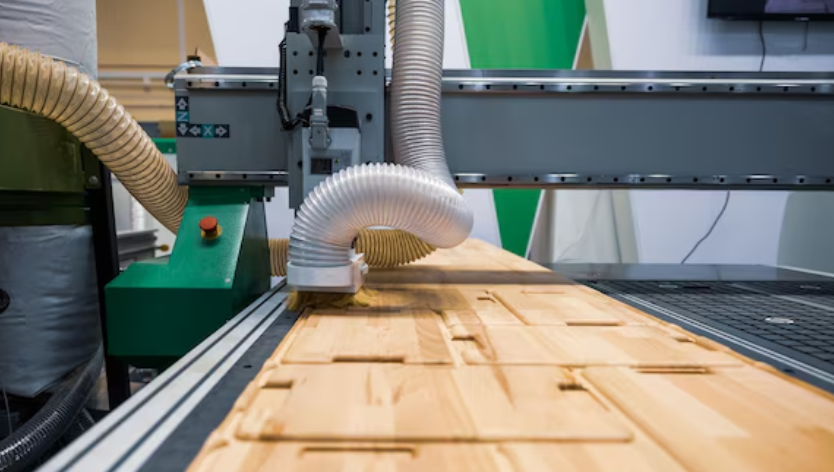
Investing in industrial CNC machinery requires careful selection for long-term efficiency and reliability.
Match Equipment to Your Production Scale
- Small / Start-up Factories: Choose high-precision standalone CNC panel saws and standard edge banding machines to ensure cutting accuracy.
- Medium / Growing Factories: Use automated loading/unloading cutting systems to reduce labor and improve efficiency.
- Large Custom Factories: Adopt fully integrated full-line solutions for seamless, uninterrupted production.
Ensure Full-Line Interoperability
Equipment must communicate and share data. A smart production line connects storage, saws, and edge banding machines. Incompatible systems create inefficiency.
Choose a Reliable Supplier
Hardware can be copied, but technology and service cannot. Trusted brands like Caelus provide professional full-line solutions and global after-sales support.
A Guide to Resolving After-Sales Issues with CNC Woodworking Machinery
CNC Woodworking Machinery: Common Issues & Smart After-Sales Support
Even high-performance CNC machines may face technical issues during long-term operation. Professional after-sales support ensures stable production and minimal downtime.
1. Software & Data Communication Errors
Symptoms: Machine cannot read MES files or respond to barcode scanning.Solutions: Check LAN connection and software code format. Caelus systems support one-click network diagnosis to quickly locate failures.
2. Reduced Mechanical Precision
Symptoms: Cutting errors over 0.5mm or visible chatter marks during trimming.Solutions: Maintain and lubricate guide rails regularly; recalibrate servo motors and tool compensation. Check air pressure for edge banding machines.
3. Abnormal Consumable Wear
Symptoms: Fast blade dulling or glue pot clogging / burning.Solutions: Use correct blade speed and tooth type for different panels. Follow standard heating/cooling rules for glue pots.
Caelus Smart After-Sales Advantage
Caelus uses IoT-based predictive maintenance to monitor machine status in real time. Remote engineers provide early diagnostics and guidance before breakdowns, greatly reducing unplanned downtime.
FAQ
Q1: What is CNC Woodworking?
A: CNC woodworking is an advanced manufacturing method powered by Computer Numerical Control technology. It uses programmed software to operate woodworking equipment for high-precision cutting, drilling and shaping of wood panels.
Q2: What equipment is used for CNC woodworking?
A: Main core equipment includes CNC panel saws, automatic edge banding machines, CNC wood routers and intelligent panel storage systems.
Q3: Is CNC panel saw necessary for furniture manufacturing?
A: It is essential core equipment. It ensures accurate panel sizes and smooth edges, laying a solid foundation for subsequent edge banding and furniture assembly processes.
Q4: How do edge banding machines connect with CNC systems?
A: Modern edge banders acquire working parameters via QR code scanning or central system data delivery, realizing automatic operation and seamless data linkage with upstream CNC cutting processes.
Q5: What is the development trend of CNC woodworking in 2026?
A: The industry will develop towards high intelligence and full integration. With AI scheduling and cross-device data interconnection, it will gradually achieve unmanned automated production.
Conclusion
Undoubtedly, CNC woodworking has become the core pillar of modern furniture manufacturing. Covering intelligent scheduling, panel storage management, precision cutting and high-quality edge banding, a complete CNC panel processing system is essential for furniture factories to boost profits amid fierce market competition.
Against the general trend of automation, digitalization and full-line integration, core competitiveness lies in mature CNC system application rather than traditional craftsmanship. Partnering with reliable suppliers such as Caelus, which provides integrated production solutions and smart after-sales services, empowers factories with solid digital production strength and secures long-term market advantages.