


In today's fiercely competitive furniture manufacturing industry, the success or failure of a piece of furniture often hinges on the details most easily overlooked. While the cutting precision of the board material is undoubtedly important, what truly determines a product's longevity, environmental rating, and a customer's first impression is that narrow strip—mere millimeters wide—that forms its edge.
Countless factory owners and purchasing managers are grappling with a single, persistent question: Which edge banding is best?
In reality, there is no single, definitive answer to this question. Perfect edge finishing represents a comprehensive synthesis of materials science, precision machinery, and production environment management. Today, we will conduct an in-depth analysis of the core mysteries behind the edge banding process, helping you navigate a complex market to identify the production solution best suited to your needs.
What is Edge Banding on Cabinets?
For end consumers unfamiliar with manufacturing processes, the edges of their cabinets may be a detail they have never even noticed. However, as manufacturers, we must confront this question head-on: What exactly is edge banding on cabinets?
Simply put, it is a process in which strip-like materials—such as plastics, wood veneers, or metals—are firmly bonded using specialized hot-melt adhesives to cover the exposed, raw cross-sections of engineered wood panels (such as particleboard or MDF) following cutting.
In cabinet manufacturing, this process plays a critical, make-or-break role:
1. Blocking Moisture: The kitchen is a high-risk zone characterized by high temperatures and high humidity. Without a tight, impermeable edge seal, moisture will rapidly infiltrate the pores of the board material, leading to swelling of the substrate, mold growth, and even structural disintegration.
2. Sealing in Formaldehyde: High-quality edge banding effectively locks away harmful substances—such as free formaldehyde—trapped within the board material, thereby significantly elevating the furniture's environmental safety rating.
3. Elevating Aesthetics: Whether the finish is high-gloss acrylic or a realistic wood grain, edge banding strips serve to conceal rough cut surfaces, making the cabinet appear as though it were sculpted from a single, solid block of premium material.
The Battle of Materials: Which Edge Banding Material is Truly the "Best"?
The market is flooded with a dazzling array of edge banding materials; understanding their physical properties is the first step toward making the right decision.
• PVC (Polyvinyl Chloride): A long-standing, traditional material that currently holds the largest share of the market. It is low-cost and highly flexible, capable of adapting to a wide variety of complex, irregularly shaped edges. However, its weather resistance is only moderate; prolonged exposure to high temperatures or UV radiation can easily lead to shrinkage and aging.
• ABS (Acrylonitrile Butadiene Styrene): Widely recognized as the "gold standard" for current mid-to-high-end furniture. ABS is 100% chlorine-free and does not emit toxic gases when burned, offering significant environmental advantages. Furthermore, it exhibits extremely low shrinkage and exceptional impact resistance; once trimmed, its edges possess a smooth, rounded finish, making it the preferred choice for high-quality cabinetry.
• Acrylic (3D): The undisputed "pinnacle of aesthetics" in the world of edge banding. It features a transparent surface layer through which underlying patterns are refracted by light, creating a powerful 3D depth effect. It is also highly resistant to scratches and abrasion. However, due to its extreme hardness, it imposes exceptionally stringent requirements on the precision of processing equipment.
• Wood Veneer: An essential choice for those seeking the ultimate in natural luxury. It preserves the natural grain and tactile feel of real wood; however, it is expensive and prone to breakage during processing, necessitating extremely precise gluing and laminating techniques.
Table 1: Edge Banding Material Comparison
| Material Type | Cost Level | Impact Resistance | Eco-Friendliness | Machine Compatibility | Ideal Application |
| PVC | Low | Medium | Low | Excellent | Mass market furniture, budget cabinets |
| ABS | Medium | High | High | Good | High-end cabinets, export furniture |
| Acrylic (3D) | High | Very High | Medium | Moderate (Needs precision) | Luxury modern kitchens, display units |
| Wood Veneer | Very High | Low to Medium | High | Moderate (Needs fine tuning) | Premium solid-wood feel furniture |
As illustrated in the table above, there is no absolute "best" material—only the "most suitable." If your focus is on high-end, eco-friendly cabinetry, ABS is clearly superior to PVC; conversely, if you are pursuing a minimalist, "light luxury" aesthetic with a high-gloss finish, Acrylic is an irreplaceable choice.
The Unsung Hero of Flawless Edge Banding: The High-Performance Edge Bander
Does selecting the right edge banding material guarantee the production of high-quality furniture? The answer is no. Throughout the entire panel processing workflow, the material serves merely as the ammunition; the true weapon is the edge bander machine located on the workshop floor.
Even the most expensive ABS edge banding will suffer from adhesive failure, wavy edges, and unsightly glue lines if processed by an aging machine with faulty temperature controls and uneven pressure distribution. Modern furniture manufacturing now demands a level of precision from edge banding machines that reaches the micron level:
• Precise Temperature Control: Different hot-melt adhesives (such as EVA or PUR) require extremely strict temperature regulation—both for melting and for maintaining a consistent working temperature. High-quality equipment ensures that, the moment adhesive is applied to the panel, it maintains optimal flow properties and bonding strength.
• Servo Pressing: The pressure exerted by the rollers must be neither excessive (which would cause panel deformation or adhesive squeeze-out) nor insufficient (which would result in a weak bond). Servo-controlled pressure rollers automatically adjust based on the panel's thickness and material composition, ensuring a tight, uniform bond across every single millimeter.
• High-Frequency Trimming: Since materials like acrylic and ABS are relatively hard, the trimming tools must operate at extremely high rotational speeds. When combined with a precision contour-tracking system, this enables the creation of perfect, rounded edges that are smooth, burr-free, and free from any whitening or discoloration.
Heading into the Future: Building a "Scientific Edge Banding Factory"
Driven by the wave of Industry 4.0, relying solely on a few standalone machines is no longer sufficient to handle the massive volume of highly fragmented, customized orders prevalent today. The industry is currently undergoing a transformation toward the establishment of "Scientific Edge Banding Factories."
This represents not merely a manufacturing workshop, but a data-driven, intelligent ecosystem. Within such a scientific factory environment:
• The Environment is Strictly Controlled: Workshop temperature and humidity are maintained at constant levels, ensuring that both the moisture content of the panels and the open time of the adhesive remain in a state of absolute stability.
• Data Flows Seamlessly: As a panel approaches the edge banding machine, the equipment scans its barcode to instantly retrieve the specific edge band thickness, color, and adhesive application volume required for that piece. Within seconds, the machine automatically adjusts its trimming tools and pressure beam settings, thereby achieving true "one-touch order switching."
• The Widespread Adoption of PUR and Laser Technology: Scientific factories are largely phasing out traditional EVA adhesives in favor of PUR (reactive polyurethane) adhesives—which offer exponentially superior water and heat resistance—and are even introducing laser edge banding technology to achieve a physically imperceptible "zero glue line."
Why is Caelus Your Ideal Edge Banding Equipment Provider?
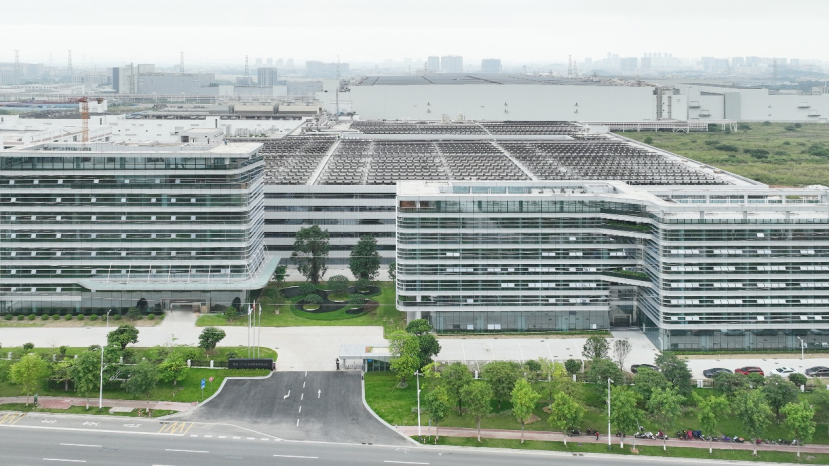
To bring the vision of a "Scientific Factory" to life, a high-performance, intelligent edge banding machine serves as the foundational core. Among the multitude of equipment manufacturers, Caelus has emerged as the trusted choice for numerous leading furniture enterprises, thanks to its profound understanding of the furniture manufacturing sector and its formidable technical capabilities. The intelligent edge banding solutions offered by Caelus are specifically engineered to address the most challenging and demanding pain points in panel processing:
1. Industrial-Grade Heavy-Duty Frame: This serves as the bedrock of stability. The massive, robust machine body completely absorbs vibrations generated during high-speed operation, ensuring micron-level precision in the trimming units—making the processing of acrylic and thick ABS materials effortless.
2. Multi-Channel Servo Magazine: Caelus equipment supports the automatic switching between multiple rolls of edge banding strips with varying specifications. When handling complex, custom whole-house furnishing orders, the machine requires no downtime for manual tape changes, thereby significantly boosting the workflow efficiency of the production line.
3. Seamless PUR System Compatibility: Caelus edge banders are equipped with advanced Teflon-coated glue pots and a precision glue application system, allowing them to perfectly master the demanding PUR hot-melt adhesive process. This means your cabinetry products will possess exceptional water and moisture resistance, allowing you to permanently bid farewell to customer complaints regarding mold growth or edge detachment in kitchen environments.
4. One-Touch Intelligent Setup: Say goodbye to tedious manual adjustments involving mechanical dials. Operators simply select the panel and edge banding thickness on the touchscreen interface, and the machine's internal array of servo motors instantly and precisely positions all processing units.
Table 2: Caelus Edge Bander Series Overview
| Series Tier | Target Production Scale | Key Technologies | Ideal For |
| Standard Class | Small to Medium Workshops | Heavy-duty frame, quick heat-up, stable trimming | Startups, basic cabinet lines |
| Professional Class | Medium to Large Custom Factories | Servo-driven adjustments, multi-tape magazine, PUR compatible | High-mix custom furniture |
| Industrial Class | Massive Continuous Production Lines | High-speed track, laser edge banding ready, fully automated | Scientific edge banding factories |
Conclusion
Returning to the original question: "Which edge banding is best?"The ultimate edge banding result is not merely a roll of high-quality ABS or acrylic material. It is the product of a perfect fusion between premium materials, a scientifically rigorous production environment, and a Caelus edge banding machine that embodies both high precision and advanced intelligence.
Only when the physical properties of the materials are precisely activated by the equipment can you forge a protective edge for your cabinetry that is simultaneously aesthetically pleasing and structurally robust—thereby infusing your furniture brand with irreplaceable value.
If you are planning to upgrade your panel processing production line, or if you wish to permanently resolve current bottlenecks in your edge banding quality, would you like me to provide you with a self-assessment checklist to help you evaluate the performance of your existing factory edge banding equipment?