


In the fiercely competitive furniture manufacturing industry, details decide business outcomes. Many factory operators note that even with high-cost boards and edge banding materials, finished goods still have uneven edges, scratches, whitening discoloration and glue residue when exposed to light.
Persistent edge band polishing defects undermine furniture quality and commercial value. We analyze issues from process, material and equipment perspectives to solve polishing troubles and strengthen panel processing competitiveness.
Polishing Is More Than Just "Wiping": Understanding the Essence of Edge Banding Polishing
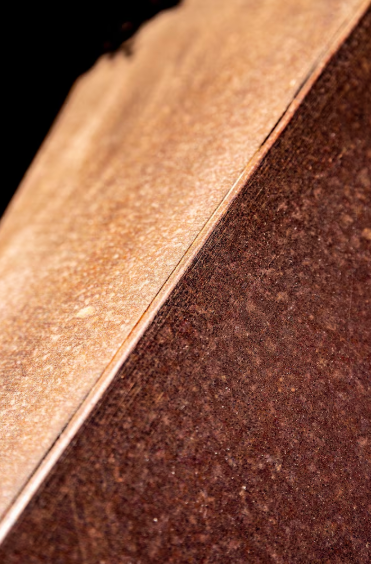
Polishing serves as the final step in automatic edge banding. High-speed cloth and felt wheels eliminate glue residue via friction and refine edges to match panel surface gloss.
Edge polishing defects rarely stem from polishing wheels alone, but cumulative errors from prior procedures. Uneven trimming, over-gluing and improper temperature control cannot be fixed solely by final polishing.
Common Edge Band Polishing Issues and Their Root Causes
To apply the right remedy, we must first identify the most common "chronic ailments" encountered on the production floor:
Edge Whitening: This is particularly common with dark-colored ABS or PVC edge banding. It typically occurs because the pressure applied by the scraping unit is excessive, or because the molecular structure of the material has been altered under mechanical stress—physical damage that the polishing wheels are unable to repair.
Glue Residue Accumulation: The polishing wheels become dirty and sticky; instead of removing old glue, they end up smearing fresh contaminants onto the surface. This issue is typically linked to the settings and performance of the glue application system during the edge banding process. Inconsistent Gloss: Certain areas along the board's edge appear bright while others appear dull; this points directly to uneven pressure from the polishing wheels or an unstable oscillation frequency.
Surface Scratches: The polishing wheel material is either too hard or contains embedded hard debris, causing the "polishing" process to inadvertently turn into "sanding."
Table 1: Common Polishing Issues and Diagnostic Root Causes
| Issue | Visual Symptom | Potential Root Cause | Machine Module to Check |
| Edge Whitening | White stress marks on dark edges | Excessive scraper pressure | Scraping Unit |
| Glue Smearing | Sticky residue on the edge profile | Cleaning spray failure / Over-gluing | Buffing & Spray System |
| Dull Finish | Low gloss vs. panel surface | Worn buffing wheels / Low RPM | Polishing Unit |
| Profile Distortion | Rounded corners are uneven | Incorrect buffing wheel angle | Support Adjustment |
How Can "Industrial Banding Capabilities" Help Solve These Challenges?
To permanently eliminate polishing-related anxieties, a factory requires genuine *industrial banding capabilities*. This goes beyond merely relying on worker experience; it hinges on the equipment's ability to exercise precise, minute control over every detail of the process.
1. Precise Spray-Assist System (Cleaning Spray)
Before entering the polishing unit, high-performance edge banders are equipped with a dual-stage spray system: one stage applies a release agent prior to pre-milling to prevent glue adhesion, while the second stage applies a specialized polishing fluid just before the polishing stage. This process softens residual glue and cools the edge banding material, preventing heat-induced discoloration during polishing.
2. Pneumatically Controlled Scraper Unit (Pneumatic Scraping)
The key to resolving the "whitening" effect lies in the scraper's gentle, flexible contact. Through pneumatic regulation, the scraper automatically fine-tunes its pressure based on the thickness of the edge banding strip, effectively removing excess cutting marks without damaging the structural integrity of the material.
3. Selection and Calibration of High-Performance Polishing Wheels
Do not overlook the angle of the polishing wheels. Ideally, the polishing wheels should be set at a specific incline relative to the edge banding and feature an automatic compensation function to ensure that polishing pressure remains constant regardless of variations in board thickness.
How Does Caelus Define Perfect Edge Banding Performance?
In the field of panel processing, Caelus's edge banding solutions consistently remain at the industry's cutting edge. To address complex polishing challenges, Caelus equipment (specifically the Caelus Edge Bander product line) incorporates several "cutting-edge technologies":
Intelligent Temperature Control and PUR Compatibility: Minimizing glue squeeze-out is the fundamental solution to polishing issues. Caelus's exceptionally stable glue application system—combined with PUR technology—achieves a "zero glue line" effect, thereby naturally reducing the pressure required during the polishing stage. High-Speed Variable Frequency Polishing Unit: The Caelus utilizes a high-quality motor to drive the polishing wheels, offering adjustable rotational speeds. You can configure specific speed and pressure parameters tailored to different materials—whether it be high-gloss acrylic or matte ABS.
Six-Station Automatic Tool Changing and Compensation: The machine automatically stores the optimal processing parameters for various materials. When switching from thin edge banding to thick edge banding, the polishing wheels automatically adjust to the optimal contact angle.
Table 2: Caelus Edge Bander Advanced Capabilities vs. Traditional Machines
| Feature | Traditional Edge Bander | E&N Professional Series | Impact on Polishing |
| Scraping Control | Manual spring tension | Multi-axis CNC/Pneumatic | Eliminates whitening marks |
| Spray System | Single or None | Dual-stage liquid cooling | No glue residue on wheels |
| Motor Drive | Fixed RPM | Frequency-controlled (VFD) | Adaptable gloss levels |
| Frame Rigidity | Lightweight / Vibrates | Heavy-duty industrial frame | Vibration-free edge profile |
FAQ
Q1: Why does my edge banding appear duller after polishing?
This is typically caused by excessive heat generated by the polishing wheels—due to high rotational speeds—which causes the PVC surface to melt slightly. Alternatively, the polishing wheels themselves may have become carbonized and blackened. We recommend checking your variable frequency drive (VFD) settings and regularly replacing the cloth polishing wheels with high-quality alternatives.
Q2: How can I resolve the issue of visible glue lines on dark-colored panels?
The key lies in minimizing the amount of adhesive applied and utilizing highly efficient scrapers. If you are using the Caelus PUR edge banding system, the glue line thickness can be controlled to less than 0.1mm; combined with meticulous final-stage polishing, the glue line becomes virtually invisible.
Q3: Is polishing fluid (cleaning agent) a necessity?
In industrial-scale furniture manufacturing, it is absolutely essential. It not only cleans away residual adhesive but also acts as a lubricant, preventing the polishing wheels from scratching the surface of the edge banding during high-speed operation.
Q4: How long does a single polishing wheel typically last?
This depends on production volume, but more importantly, on the frequency of cleaning. If the fluid spraying system is functioning correctly—preventing adhesive buildup on the wheels—the lifespan of the polishing wheels can be extended by 3 to 5 times. However, as soon as you notice the wheel edges becoming hardened or blackened, they should be replaced immediately.
Conclusion: Eliminating Polishing Imperfections at the Source
Perfect edge banding is not something that is merely "polished into existence," but rather something that is "calculated and engineered into existence."
The ultimate solution for resolving edge banding polishing issues is to view the final polishing stage as the "finishing touch" that enhances precise upstream processing—rather than as a means to "mask defects." By introducing Caelus edgebanding equipment—renowned for its robust industrial capabilities—you can achieve complete digital control over the entire process, from adhesive application and pressing to trimming and polishing.
Once your factory is no longer plagued by issues such as visible glue lines, whitening, or surface scratches, your products will naturally stand out in the highly competitive furniture market.
Would you like to learn how to configure the optimal polishing pressure parameters for various edgebanding materials—such as ABS and acrylic? I can provide you with a detailed guide on equipment adjustment.