
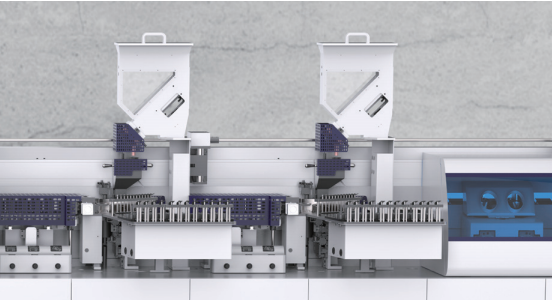
In modern furniture production, wood panels form the framework of furniture, while edge banding serves as its outer surface. This thin layer of plastic or wood veneer merely several millimeters thick is not just a cosmetic treatment to hide flaws. It delivers multiple practical values:
- Moisture resistance: Blocks ambient moisture from seeping into wood panels
- Safety protection: Restrains formaldehyde and other harmful gas emissions
- Value enhancement: Smooth and fine edge finish boosts consumers’ purchase willingness and product value
Different edge banding materials bring distinct practical outcomes. Key evaluation criteria include bonding firmness, appearance effect and compatibility with factory edge banding machines.
Improper material selection or mismatched machine adaptation easily causes peeling, blistering and cracking, sharply raising rework costs. Hence, furniture manufacturers and procurement personnel all focus on finding the optimal edge banding material.
Does a "Best" Material Exist? Understanding Edge Banding Material Evaluation Criteria
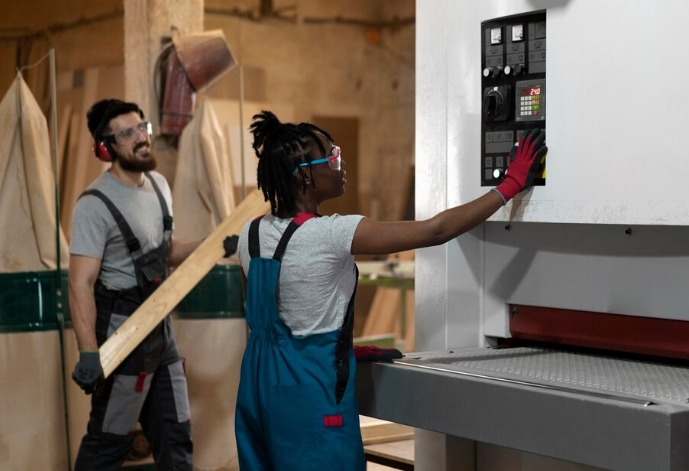
Let's start with a dose of reality: discussing "best" without considering the application scenario is meaningless.
Before discussing the best material, we need to clarify several harsh evaluation dimensions:
1. Durability: Can it withstand severe impacts?
2. Moisture Resistance: Will it chip or crack when placed on a bathroom vanity?
3. Compatibility: Can your edge banding machine handle it?
4. Cost: Is it beneficial for the furniture manufacturing industry's profitability?
5. Appearance: Aesthetics are paramount.
6. Environmental Standards: Can it meet the stringent export standards of Europe and America?
Therefore, the answer to "best" material varies greatly depending on the furniture manufacturing scenario.
Comparative Analysis of Common Edge Banding Material Types
Let’s conduct a straightforward comparison of mainstream edge banding materials to pick the ideal option.
PVC Edge Banding
It dominates the market as a cost-effective mainstream choice.
- Advantages: Low price, great flexibility and easy processing, trimable with common scissors.
- Disadvantages: Releases toxic gas when combusted, mediocre heat resistance and susceptible to thermal shrinkage.
- Applicable scenes: Mass-produced furniture, mid and low-end goods, office furniture.
- Machine compatibility: Universal fit, compatible with most edge banding equipment.
ABS Edge Banding
An upgraded alternative to PVC, widely adopted in mid-to-high-end sectors.
- Advantages: Chlorine-free and eco-friendly with harmless combustion performance, slight shrinkage rate, superb heat resistance and premium surface texture.
- Disadvantages: Higher cost and relatively rigid texture.
- Applicable scenes: High-end customized furniture, kids furniture and export products for European and American markets.
Acrylic (PMMA/3D) Edge Banding
Premium decorative edge banding featuring exclusive 3D visual effect.
- Advantages: Outstanding high-gloss appearance, scratch and wear resistant.
- Disadvantages: High price and rigid texture, strict requirements on processing machines. Unsharp trimming tools or inaccurate shaping will easily lead to edge chipping.
Wood Veneer Edge Banding
Premium material representing natural luxury style.
- Advantages: Authentic natural wood grain and tactile sense, the prime pick for high-end veneer furniture.
- Disadvantages: High cost and natural color difference. Professional gluing and polishing equipment is required to avoid cracking.
Melamine Edge Banding
Traditional material mainly applied to low-end manufacturing currently.
- Advantages: Ultra-low cost, self-adhesive design supports manual iron sticking, fine color matching with panels.
- Disadvantages: Fragile texture, poor impact resistance, prone to edge damage and short service life.
Best Material Selection for Different Furniture Manufacturing Scenarios
Choose the right material for your factory.
Scenario 1: Large-scale standardized production lines (e.g., long-term rental apartment furniture, basic office desks)
Recommendation: PVC
Reason: Cost control is key. It has the strongest compatibility with high-speed automated edge banding machines, high fault tolerance, and can ensure efficient 24/7 operation.
Scenario 2: High-end whole-house custom furniture (villas, large-apartment projects)
Recommendation: ABS, Acrylic, Wood Veneer
Reason: This group of customers is not price-sensitive but extremely discerning about details and environmental protection. ABS ensures environmental friendliness, Acrylic provides a stunning modern feel, and Wood Veneer satisfies the old-money luxury.
Scenario 3: Exporting to European and American markets
Recommendation: ABS
Reason: Europe has increasingly strict restrictions on PVC. Using ABS can shield you from many environmental regulations and ensure smooth customs clearance.
The Relationship Between Materials and Edge Bander Machine
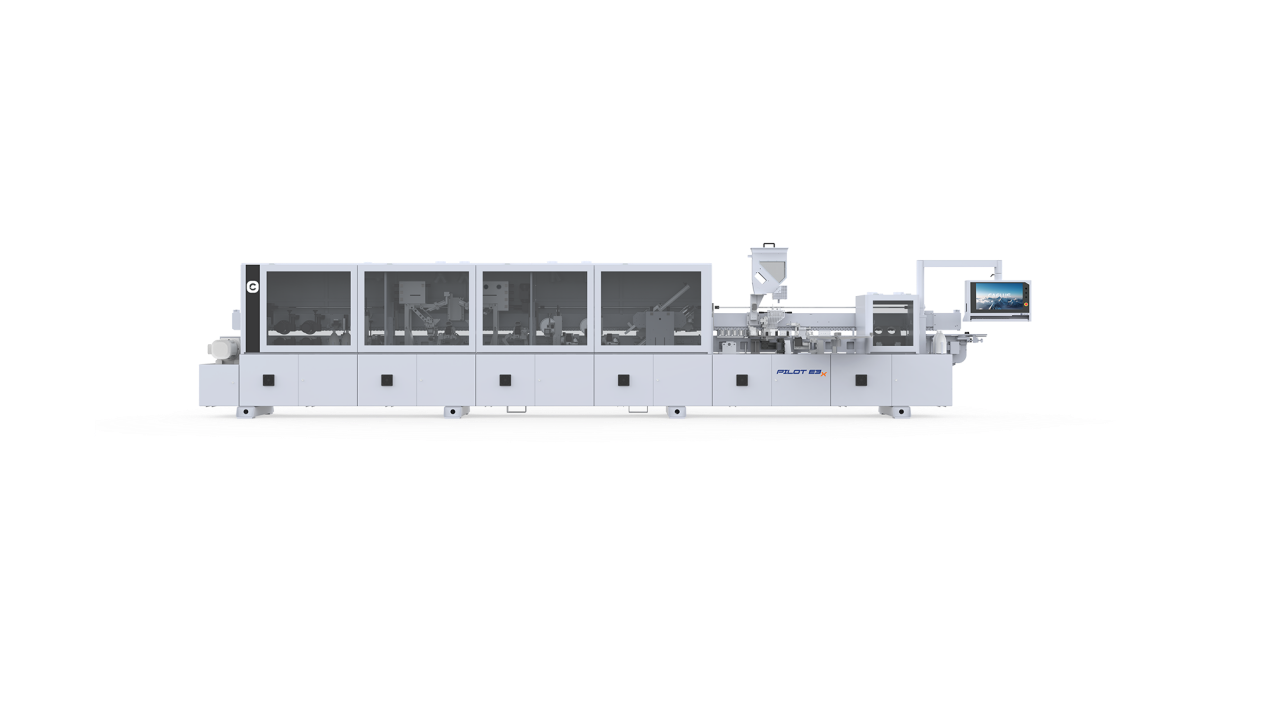
Materials and Edge Bander Machine
Many enterprises invest heavily in edge banding materials yet ignore a key factor — perfect compatibility between materials and edge banding machines.
Premium accessories deserve matched equipment. Even high-grade acrylic edge banding cannot deliver ideal effects on outdated machines with unstable temperature and pressure control, performing worse than affordable PVC materials. Various materials pose strict demands on processing equipment:
- Temperature control accuracy: Wood veneer needs high working temperature, while thin PVC easily melts under excessive heat.
- Roller pressure intensity: Rigid acrylic requires sufficient pressure for firm bonding; soft materials tend to deform under overpressure.
- Trimming precision: Tiny trimming deviations will leave obvious ugly black marks on high-end edge surfaces.
- PUR adhesive adaptability: Seamless and waterproof premium edge sealing relies on machine compatibility with polyurethane hot melt adhesive.
Merits of High-end Edge Banding Machines
Taking Caelus edge banders as an example, premium models feature rigid machine body and smart operational functions. They support automatic temperature control, multi-stock material switching for varied thickness bands and intelligent parameter adjustment. The equipment is fully compatible with PUR adhesive systems and laser edge sealing technology, maximizing material performance and delivering seamless glue-free edges.
Impacts of Environmental Trends on Material Selection
Green manufacturing has become mainstream in the furniture industry. Global environmental norms including US CARB rules and European E0 & ENF standards grow increasingly rigorous.Low-VOC and zero-VOC adhesives gain wide popularity. The combination of ABS edge banding and PUR hot melt adhesive gains fast market traction. It achieves zero formaldehyde emission and outstanding waterproof performance, keeping edges intact even after long-time water immersion. Factories failing to adopt eco-friendly edge banding solutions will lose competitiveness in mid-to-high-end markets.
Cost vs. Performance: How to Make a Rational Choice for Furniture Manufacturing?
To help you make a more intuitive decision, we have compiled the following comparison table:
Table 1: Edge Banding Materials Comparison
|
Material Type |
Cost Level |
Durability |
Eco Friendliness |
Machine Compatibility |
|
PVC |
Low |
Medium |
Low |
Excellent |
|
ABS |
Medium |
High |
High |
Good |
|
Acrylic |
High |
Very High |
Medium |
Moderate |
|
Wood Veneer |
Very High |
Medium |
High |
Moderate |
|
Melamine |
Very Low |
Low |
Medium |
Excellent |
Future Trends: Combination of Edge Banding Materials and Automated Production
In Industry 4.0, materials and processing equipment achieve dynamic coordination.
Future development focuses on deep integration of materials and intelligent edge banders. When coded panels feed into Caelus edge banders, built-in scanners quickly identify data. The equipment automatically selects matching materials like 1.2mm ABS or 2.0mm acrylic, and rapidly switches material bins, adjusts glue dosage, pressure height and trimming positions in seconds.
Connected with upstream panel data, the system realizes one-click material switching with fully automatic operation, greatly boosting production efficiency.
FAQ
Q1: Which edge banding material boasts the longest service life?
Acrylic and ABS rank top in durability. Featuring superior impact and wear resistance, they fit kitchens and frequently-used commercial areas perfectly.
Q2: Does ABS outperform PVC edge banding?
Definitely. Chlorine-free ABS is eco-friendly with no toxic fumes while burning. It has lower shrinkage and better heat resistance, serving as the prime option for premium furniture.
Q3: Optimal edge banding material for kitchen cabinets?
ABS paired with PUR hot melt adhesive is the ideal pick. It delivers outstanding waterproof and damp-proof performance to avoid mildew and cracking under hot and humid kitchen conditions.
Q4: Does edge banding influence furniture service life?
Surely. Premium edge banding seals panels against moisture erosion, stops deformation and effectively prolongs furniture lifespan.
Q5: Can one single smart edge bander process diverse materials?
Caelus intelligent edge banders fully support multi-material processing. Fitted with servo material bins and smart tool positioning systems, it smoothly processes PVC, ABS and wood veneer.
Conclusion
No universally superior edge banding material, only the most proper choice.
Material selection relies on product positioning, production scale and workshop equipment grade. Cost-effective PVC suits mass low-end production; ABS and acrylic excel at high-end customization. Stable profits require perfect matching between materials and machines amid fierce market competition.
Frequent edge peeling and trimming whitening usually result from mismatched materials and outdated devices. High-precision, multi-compatible Caelus edge banders help manufacturers break production bottlenecks.