

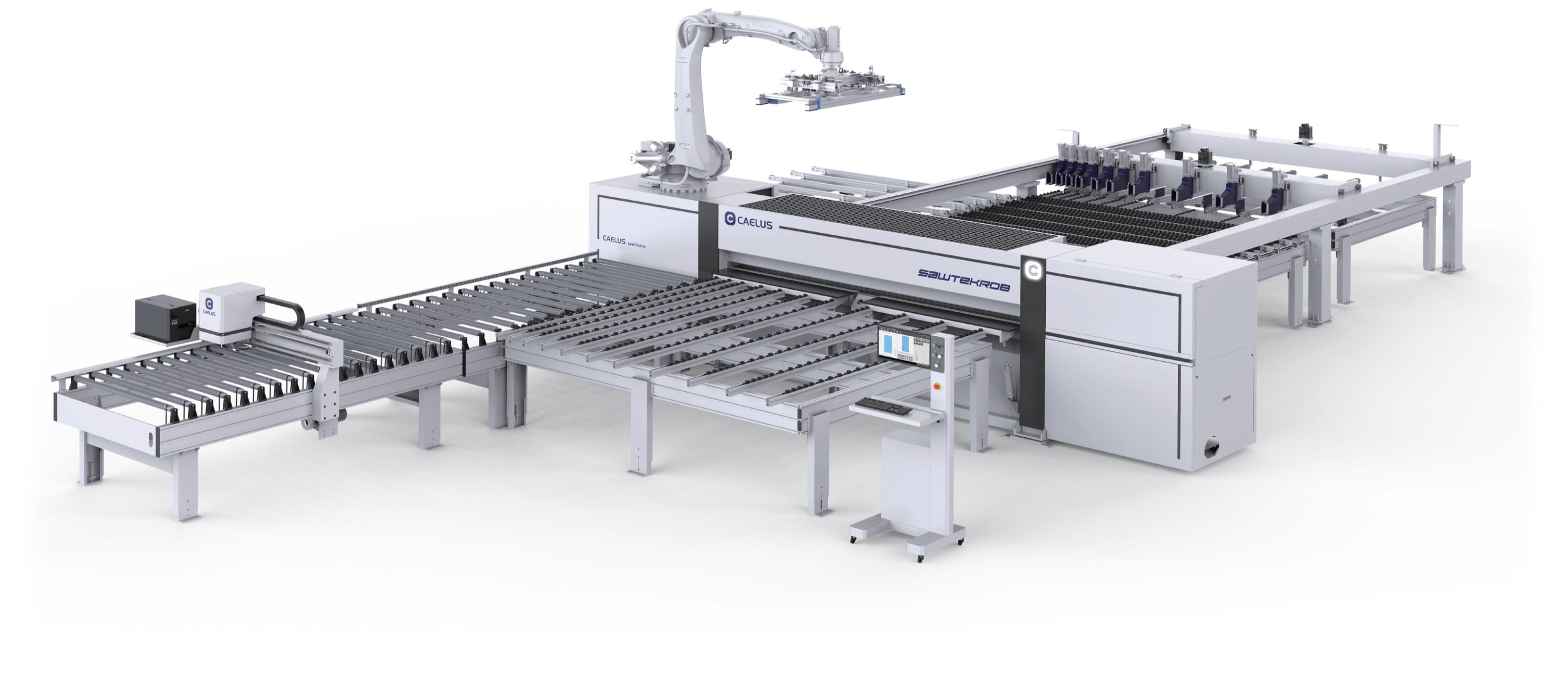
In the fast-paced world of modern furniture manufacturing, if we compare the entire production process to a relay race, then "panel cutting" is undoubtedly the first leg that determines the outcome. This cutting step directly determines a factory's production efficiency, dimensional accuracy, and material utilization, which is crucial to profits.
With the popularization of whole-house customization and smart manufacturing, traditional cutting methods are being ruthlessly phased out. The once-roaring traditional panel saws in workshops are gradually transforming into more intelligent and powerful CNC beam saws. For any ambitious medium-to-large-sized furniture factory, a CNC beam saw is no longer an optional "icing on the cake," but a "core piece of machine" supporting production capacity.
So the question is: what exactly is a CNC beam saw? What are the fundamental differences between it and the ordinary panel saw we often talk about? Today, we'll provide you with an in-depth, hardcore explanation.
What is a CNC Beam Saw?
Basic Definition of CNC Beam Saw
To understand a CNC beam saw, we can break it down. It's a machine that:
Utilizes the brain of a numerical control system (CNC).
Has a robust body that firmly holds the panel in place via heavy-duty transverse beams.
An industrial behemoth capable of automatically completing batch, high-precision cuts.
In short, it's the ultimate evolution of the industrial-grade panel saw, specifically designed for high-throughput, high-precision panel cutting.
Core Structure of a CNC Beam Saw
An excellent CNC beam saw achieves fast and accurate cuts thanks to its sophisticated internal structure:
Main Saw + scoring saw (Scribing Saw): This is the secret weapon against chipping. The scoring saw first scores a shallow groove on the bottom of the panel before the main saw cuts through, ensuring a perfectly smooth cut on both sides.
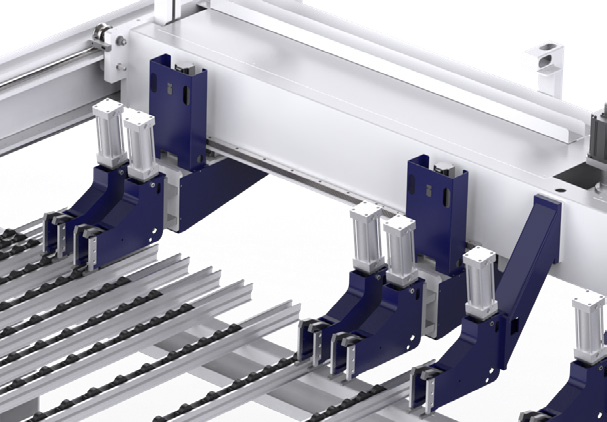
- Beam Clamping System: This is where its name comes from. During cutting, the heavy-duty beams firmly hold the panel in place, eliminating any even the slightest vibration.
- Automatic Feeding System: Mechanical grippers at the rear precisely grasp the panel and automatically push it according to the programmed dimensions.
- CNC Control System: The machine's brain, responsible for receiving instructions, controlling servo motors, and monitoring the entire cutting process.
- Optimized Layout Software: This is a cost-saving tool; it calculates the most material-efficient cutting path, minimizing material waste.
This combination makes the CNC beam saw the most dazzling star in the modern CNC panel saw family.
How Does the CNC Beam Saw Work?
A complex machine, yet its workflow is as smooth as flowing water: Import Cutting Drawings: Import the cutting bill of materials (BOM) generated by the design software into the machine via network or USB drive.
Optimized Layout: The machine's built-in software instantly calculates the optimal cutting plan, minimizing waste.
Automatic Feeding: The operator places the panel on the worktable (or via an automatic feeder), and the rear grippers automatically grasp the panel and push it to the designated position.
Beam clamping: A heavy beam descends, firmly securing the board to the saw table.
High-speed cutting by main and auxiliary saws: The saw carriage moves back and forth at high speed under the beam, completing a precise cut.
Core advantages: The entire process requires almost no human intervention. Its cutting precision is extremely high, and its repeatability is consistently stable, making it the ultimate tool for handling large-volume furniture orders.
Differences between CNC Beam Saw and Traditional Panel Saw
When we search for "panel saw vs beam saw," the question we most often want answered is: Which one should I buy? Let's compare them from three dimensions.
Structural and Application Differences
CNC Beam Saw vs Traditional Panel Saw
|
Feature |
CNC Beam Saw |
Traditional Panel Saw |
|
Clamping Method |
Heavy-duty automatic pressure beam |
Manual or simple clamping devices |
|
Automation Level |
Very High (CNC controlled, auto-feeding) |
Low to Medium (Manual pushing/setting) |
|
Cutting Capacity |
Stack cutting (multiple panels at once) |
Usually single panel cutting |
|
Ideal Factory Size |
Medium to Large scale factories |
Small workshops, prototyping |
|
Operator Skill Need |
Software operation focus |
Physical skill and experience focus |
Automation Level
The CNC beam saw is a truly highly automated device. The worker only needs to place the board, press a button, and the machine can automatically complete the feeding, clamping, cutting, and even label printing. Ordinary panel saws require workers to push the board throughout the entire process, which is physically demanding and highly dependent on worker experience.
Cutting Accuracy
Thanks to the heavy-duty pressure beam, the board will not shift during cutting. Therefore, the accuracy of a CNC beam saw is far superior to that of a traditional panel saw. This is crucial for subsequent automatic edge banding and CNC drilling processes—accurate first cuts prevent errors later.
Applications of CNC Beam Saw in Furniture Manufacturing
In modern furniture manufacturing, CNC beam saws are ubiquitous.
Main application scenarios include:
Plate furniture production: Standardized batch cutting of items such as desks and bookcases.
Cabinet and wardrobe manufacturing: Processing cabinet bodies and door panels with extremely high dimensional accuracy requirements.
Mass customization furniture: Utilizing powerful software optimization capabilities, flexible size customization is achieved in mass production.
Core advantages: It not only enables high-speed batch cutting, but more importantly, with the support of layout software, material utilization is significantly improved. Every sheet of board saved represents real profit for the factory.
CNC Beam Saw vs. CNC Panel Saw: Are they the same?
Many newcomers get confused by these two terms. Simply put:
A CNC beam saw is a specific type within the CNC panel saw family.
You can say all beam saws are panel saws, but you can't say all panel saws are beam saws.
"CNC panel saw" is a broad term, referring to all panel cutting saws with CNC systems.
A beam saw, on the other hand, emphasizes its unique "crossbeam" structure and automatic feeding system.
Therefore, when looking for machine capable of handling stacked sheets and achieving fully automated cutting, what you really need is a CNC beam saw.
How to Choose the Right CNC Beam Saw?
When purchasing this "money-devouring beast," you must keep your eyes open. The following dimensions are key considerations:
Cutting Accuracy and Speed: The quality of the servo motor and guide rails determines how fast and accurate the cuts are.
Automation Level: Does it have an automatic loading table? Can it automatically dispense labels?
Layout Optimization Software: The quality of the software algorithm directly affects your panel yield.
Integration with Edge Banding Machines: Can this saw seamlessly integrate into your existing production line network?
After-Sales Service: A single day of machine downtime results in significant losses; the manufacturer's response speed is extremely important.
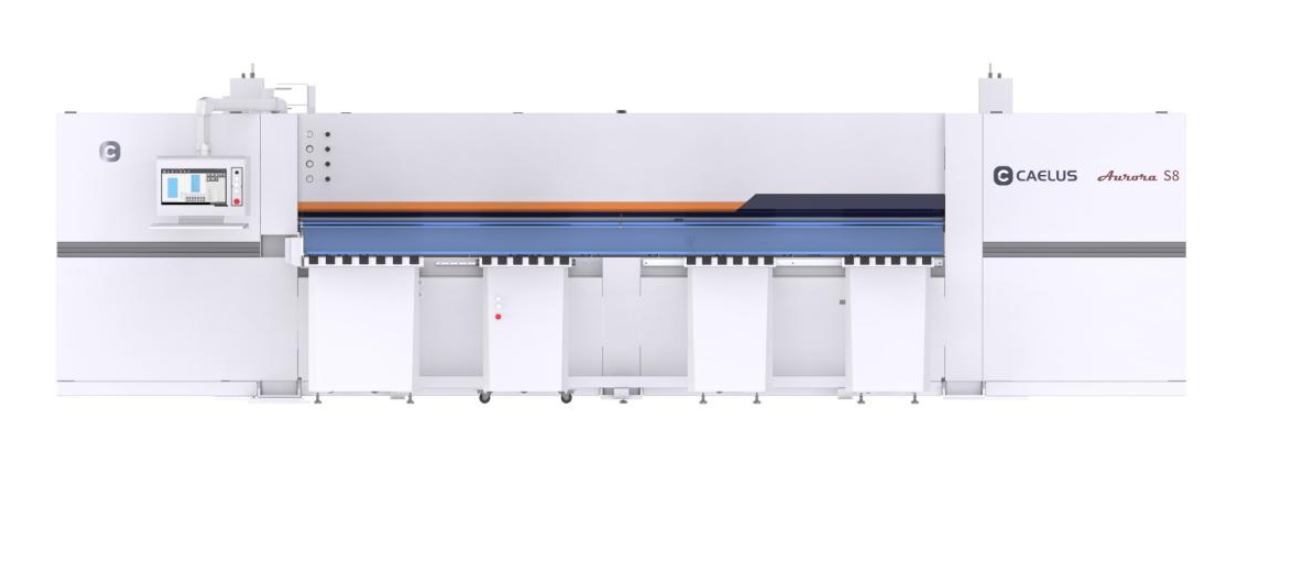
In this stage, choosing a reliable panel saw manufacturer is crucial. For example, Caelus from China is a highly competitive manufacturer. Caelus' high-end models, such as the Aurora S8, are designed for high-volume production, featuring a high-speed linear drive saw frame and an independent dual-push system, enabling efficient parallel processing and loading. They are an excellent choice for factories seeking high capacity and cost-effectiveness.
Future Trends of CNC Beam Saw
Looking to the future, the cutting process will become increasingly "intelligent."
Integration with Storage System: The intelligent board storage system automatically feeds boards into the saw, achieving truly unmanned material preparation.
Automatic Integration with Edge Bander: Cut boards enter the edge banding machine directly via a rotary line, with data flowing along with the boards, eliminating the need for manual barcode scanning.
Intelligent Layout System Upgrade: Introducing AI algorithms, it not only considers material saving but also combines the cycle time of subsequent processes to achieve optimal production scheduling.
The ultimate goal is to truly achieve unmanned, lights-out factory-style automated furniture manufacturing.
FAQ
To help you make clearer decisions, we have compiled the following frequently asked questions:
Q1: What is the difference between a CNC beam saw and a panel saw?
A: The biggest difference lies in the structure and automation. Beam saws have heavy-duty beams that automatically secure the boards and are equipped with automatic feeding clamps, suitable for batch high-precision cutting; while ordinary panel saws are mostly manual push tables, relying on manual operation.
Q2: Is a CNC beam saw suitable for small furniture factories?
A: If a small factory has small and varied order volumes, a regular precision panel saw may suffice. However, if a small factory wants to quickly expand its production capacity or transition to whole-house customization, an entry-level CNC beam saw (such as the Caelus Panel Saw Pilot series) would be a highly cost-effective investment.
Q3: How accurate is a CNC beam saw?
A: Extremely accurate. Thanks to its heavy-duty frame, high-precision servo control, and absolutely fixed pressure beam, an excellent CNC beam saw can typically control cutting errors to ±0.1mm or even lower.
Q4: What is the difference between a CNC panel saw and a beam saw?
A: "CNC panel saw" is a general term encompassing all CNC panel saws; while "beam saw" specifically refers to a high-efficiency batch cutting saw with a pressure beam system and automatic feed mechanism.
Q5: Which panel saw manufacturer offers reliable CNC beam saw solutions?
A: There are many excellent brands on the market. Among them, Caelus, with its Pilot and Aurora series, offers complete solutions from entry-level to high-end flexible cutting centers, making it a highly capable professional manufacturer.
Conclusion
Undoubtedly, the CNC beam saw is the absolute representative of high-end automated panel saws.
With its heavy-duty pressure beam structure and high degree of CNC integration, it solves the three major pain points of traditional manual cutting: slow speed, poor precision, and excessive waste. For medium to large-sized furniture manufacturing enterprises committed to expanding scale and improving quality, upgrading from a sliding table saw to a beam saw is an essential step.
Remember, you are not just buying a wood-cutting machine, but the "efficiency engine" of your entire factory. Therefore, when upgrading machine, choosing a professional panel saw manufacturer with technical expertise will ensure the most lucrative return on your investment.