

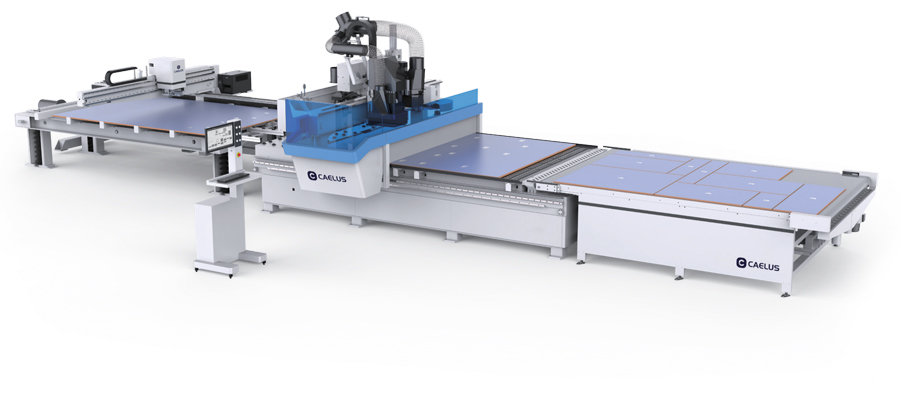
Choosing a CNC Nesting machine for MDF, plywood and particleboard is not just a question of table size or spindle power. These three materials behave differently during cutting, drilling, grooving and routing. MDF creates fine dust. Plywood has layered grain and can tear out at the edge. Particleboard is cost-effective for cabinet production, but it needs stable vacuum holding and sharp tooling to avoid chipping and part movement.
For a cabinet shop, wardrobe manufacturer or custom furniture factory, the right wood CNC Nesting machine should solve daily production problems: inaccurate parts, edge defects, slow manual handling, sorting mistakes, poor material use and unstable output. A machine that looks good on paper may still cause trouble if its vacuum system, frame structure, spindle, tool changer, software and automation level do not match the material mix.
This article gives a practical way to choose a CNC Nesting machine for MDF, plywood and particleboard without getting lost in specifications.
Quick Answer: What Should You Check First?
For MDF, plywood and particleboard, focus on seven factors:
1. Material type and board thickness
2. Working area and maximum panel size
3. Vacuum table design and vacuum zones
4. Spindle power and tool holder quality
5. Automatic tool changer capacity
6. Frame rigidity and motion system
7. Labeling, loading, outfeed and software integration
If your factory mainly cuts cabinet panels, the best choice is usually not the cheapest basic CNC router. It is a production-level CNC Nesting machine with reliable vacuum hold-down, automatic tool changing, stable high-speed cutting, and a workflow that connects nesting, drilling, labeling, outfeed and later edge banding or assembly.
MDF, Plywood and Particleboard Are Not the Same
Many buyers ask whether one CNC Nesting machine can process all three materials. The answer is yes, but only if the machine is configured for mixed panel production.
MDF is dense and uniform, which makes it easy to route cleanly. The challenge is dust. Fine MDF dust can build up on the spoilboard, reduce vacuum performance, affect tool life and create more cleaning work between sheets. If MDF is your main material, dust evacuation and table cleaning should be treated as core machine requirements, not optional details.
Plywood is stronger and more structural, but its layered construction can create tear-out, especially when the tool, feed rate or hold-down is not correct. For plywood, machine rigidity and tooling strategy matter. A weak frame or unstable motion system can show up as rough edges, vibration marks or inconsistent finished dimensions.
Particleboard and laminated particleboard are widely used in cabinet and wardrobe production because they are economical and efficient for panel furniture. The challenge is edge quality and holding stability. The internal structure is less uniform than MDF, and small parts or narrow strips can move if vacuum force drops during cutting. For particleboard, multi-zone vacuum, sharp tools and stable feed are essential.
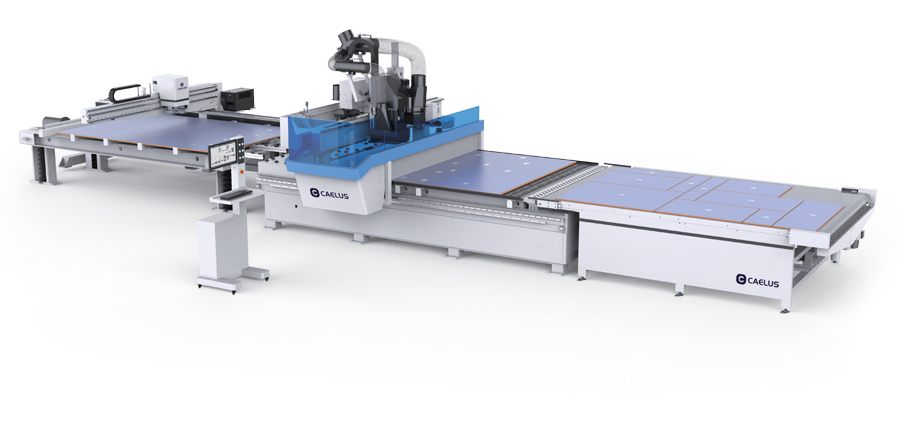
Material Comparison Table
| Material | Main Risk | What to Prioritize in a CNC Nesting Machine |
|---|---|---|
| MDF | Fine dust, spoilboard contamination, tool wear | Strong dust extraction, stable spindle, automatic pusher, reliable vacuum table |
| Plywood | Tear-out, vibration, higher cutting load | Rigid frame, precise motion, compression tools, steady feed control |
| Particleboard | Edge chipping, part movement, variable internal density | Multi-zone vacuum, sharp tooling, ATC, stable clamping and labeling |
| Laminated panels | Surface chipping before edge banding | Proper cutter selection, accurate Z control, finishing pass options |
| Mixed materials | Frequent tool and parameter changes | Automatic tool changer, material presets, software integration |
This table is a more useful starting point than choosing a machine by spindle power alone. In real production, each material creates a different bottleneck.
1. Choose the Right Working Area
The working area should match your largest regular panel, not only your current smallest job. Many furniture factories process full-size panels for cabinets, wardrobes, office furniture and custom interiors. If the table is too small, operators must pre-cut sheets, add handling steps and reduce nesting efficiency.
A 3100 × 2100 mm working range is suitable for many panel furniture applications. For larger production layouts, a 4200 × 2100 mm panel capacity gives more flexibility for longer sheets and batch processing. Panel thickness also matters. A machine that supports 10–40 mm panels gives more room for MDF, plywood and particleboard projects with different thickness requirements.
Before requesting a quote, prepare your common panel sizes, maximum sheet size, material thickness range and factory layout. These details are more useful than simply asking for a "standard CNC nesting router."
2. Check the Vacuum Worktable, Not Just the Pump
Vacuum hold-down is one of the most important factors for CNC nesting. The workpiece is held because atmospheric pressure pushes it against the table when air is removed from below. In theory, one square inch can receive up to about 14.7 pounds of holding force at full vacuum. In real woodworking, the usable force is much lower because of leakage, material porosity, open zones, dust, spoilboard wear and cutouts created during machining.
This is why vacuum zones matter. A multi-zone vacuum table allows the machine to focus suction under the active sheet area instead of wasting airflow through uncovered table sections. It also helps when cutting smaller panels or offcuts.
For MDF, a replaceable MDF spoilboard helps distribute vacuum across the sheet. For particleboard, reliable clamping reduces movement and edge defects. For plywood, steady hold-down helps control vibration and tear-out.
When comparing CNC Nesting machines, ask:
- How many vacuum zones does the machine have?
- Are the zones automatically controlled?
- Is the vacuum chamber sealed?
- Does the table design support MDF spoilboard use?
- Is there a pusher or cleaning function to clear dust from the table?
- Can the vacuum system handle porous boards and smaller parts?
A high-flow pump is valuable, but vacuum design is more than pump size. A sealed chamber, proper zones, clean spoilboard and good CAM strategy often decide whether parts stay stable.
3. Spindle Power Should Match Real Production
For professional MDF, plywood and particleboard cutting, spindle power should support continuous routing, not just occasional light work. Many production buyers compare machines in the 5–15 kW spindle range, depending on material, thickness, feed rate and daily workload.
For a high-quality CNC Nesting machine, a 13.2 kW spindle provides strong capacity for panel furniture processing. It gives the machine enough power for routing, grooving and cutting thicker or denser boards, while still leaving room for stable production speeds.
But power alone is not the full story. Tool holder accuracy, cooling, spindle durability and automatic tool measurement all affect finished part quality. A stable spindle with HSK-F63 tool holding, automatic tool setting and a controlled cutting process is more valuable than a high power number without repeatability.
4. Do Not Skip the Automatic Tool Changer
An automatic tool changer is essential for modern cabinet and custom furniture production. MDF, plywood and particleboard jobs often require different tools in the same nesting program: compression cutters, straight bits, drilling tools, grooving saws and finishing tools.
Without ATC, operators must stop the machine, change tools manually and reset settings. That adds time and increases the chance of error. With a 16-position automatic tool changer, the machine can switch tools quickly and consistently for cutting, drilling, grooving and special processing.
ATC is especially important when your factory handles mixed orders. If every sheet contains different parts, different hole patterns and different grooves, manual tool changing becomes a bottleneck.
5. Frame Rigidity Affects Edge Quality
A heavy-duty, stress-relieved frame is not just a durability feature. It affects cut quality every day. When the machine accelerates across a large sheet, the frame must resist vibration and flexing. If it does not, the result may be rough edges, inaccurate hole positions, visible tool marks or unstable dimensions.
This is especially important for plywood and laminated panels, where vibration can increase tear-out. It also matters for particleboard, because edge chipping before edge banding can create visible quality problems later.
Look for a rigid frame, sealed vacuum chamber and precise motion system. High-precision helical rack drives on X/Y axes and a ball screw Z-axis help provide smooth motion and accurate vertical control. These details are important when cutting cabinet components that must fit correctly during assembly.
6. Match the Machine to the Full Furniture Workflow
A CNC Nesting machine should not be viewed as a standalone cutter. In panel furniture production, every part must move through labeling, cutting, drilling, grooving, edge banding, sorting and assembly. If the nesting process creates confusion, the whole factory slows down.
Automatic labeling helps solve one of the biggest problems in custom furniture: identifying each part after cutting. When panels are labeled before or during nesting, operators can connect each part to the order, cabinet position and next process.
Automatic loading reduces manual handling. Intelligent outfeed helps move finished parts away from the machine efficiently. ERP or user software integration helps connect design data with production data, which is important for batch-one manufacturing.
Caelus CNC nesting solutions combine automatic labeling, drilling, grooving, routing, cutting and outfeed for panel furniture production. This type of integrated workflow is especially useful for factories producing cabinets, wardrobes and custom furniture from MDF, plywood and particleboard.
7. Choose by Factory Type
A small cabinet workshop may need a reliable CNC Nesting machine with vacuum table, ATC and basic drilling functions. The goal is to reduce manual cutting, improve accuracy and handle regular cabinet panels.
A custom furniture factory should focus more on labeling, software integration, tool changing and flexible material handling. The goal is to process many different orders with fewer sorting mistakes and less manual checking.
A high-volume particleboard furniture factory should prioritize automatic loading, multi-zone vacuum, high-power spindle, intelligent outfeed and stable connection with edge banding and drilling processes. The goal is not only cut speed, but continuous production with fewer interruptions.
A factory cutting a lot of MDF should also pay attention to dust cleaning, spoilboard maintenance and tool life. A factory cutting plywood should ask for test cuts, especially on edge quality and drilling accuracy.
Common Buying Mistakes
The first mistake is choosing by price only. A low-cost machine can become expensive if it causes panel waste, tool breakage, slow setup and manual rework.
The second mistake is choosing by spindle power only. Spindle power matters, but vacuum, frame rigidity, tool changing and software may have a bigger effect on daily efficiency.
The third mistake is ignoring small parts. A machine that cuts large panels well may still struggle with small connectors, narrow strips and offcuts if the vacuum system is weak.
The fourth mistake is forgetting the next process. Poor edge quality affects edge banding. Poor labeling affects sorting. Poor drilling accuracy affects assembly.
The fifth mistake is buying a machine that cannot grow with the factory. If you plan to move toward automated furniture manufacturing, choose a CNC nesting system that can connect with labeling, outfeed, ERP and downstream equipment.
Final Checklist Before You Buy
Before choosing a CNC Nesting machine, prepare these details:
- Main materials: MDF, plywood, particleboard or laminated boards
- Maximum panel size and thickness
- Daily sheet volume
- Smallest part size
- Required edge quality before edge banding
- Need for drilling and grooving
- Need for automatic labeling
- Current CAD/CAM or ERP software
- Available factory space
- Future automation plan
The best CNC Nesting machine is the one that fits your material, production volume and workflow. For MDF, choose strong dust control and stable cutting. For plywood, choose rigidity and accurate motion. For particleboard, choose reliable vacuum hold-down, sharp tooling and efficient labeling.
If your factory produces cabinets, wardrobes or custom furniture, Caelus can help match panel size, material type, thickness, output target and automation requirements with a suitable CNC nesting solution. The right choice should not only cut MDF, plywood and particleboard. It should help your factory produce cleaner parts, reduce manual handling and keep the whole panel furniture workflow moving smoothly.