

In the field of materials science, tensile strength is a measure of the maximum stress a material can withstand before breaking when pulled. For engineers, it is the most intuitive data for evaluating whether a material is "strong"; for manufacturing companies, it is the bottom line for product quality.
Tensile strength is different from hardness or compressive strength; it focuses on "tensile" resistance. Imagine when we try to pull two materials joined together apart with force; this resistance to separation is what we focus on. In industrial production, it is a core indicator for judging the reliability of materials. If a product's tensile strength is substandard, then no matter how exquisite its appearance, it faces a very high risk of failure in actual use.
Why is Tensile Strength Crucial for Furniture Manufacturing?
In the furniture manufacturing industry, especially in panel furniture production, we rarely directly pull on entire panels, but microscopic "pulling" is everywhere.
Common tensile applications in furniture manufacturing
When we talk about the quality of cabinets, wardrobes, or office desks, we are actually testing the bonding strength of various stages of panel processing. The bonding of edge banding to the panel cross-section, the adhesion of facing materials to the substrate, and even the nail-holding power at the hardware connections are all essentially related to tensile strength.
The hidden dangers of insufficient tensile strength
If this indicator is neglected during the production process, the consequences are often disastrous:
- Edge banding cracking: This is the most common complaint. Due to insufficient bonding strength, the edge banding separates from the panel under temperature changes or slight impacts.
- Adhesive layer peeling: In humid environments, low tensile strength adhesive layers cannot withstand the stress caused by moisture erosion, leading to blistering or peeling of the veneer.
- Short product lifespan: The panels cannot withstand the vibrations of opening and closing doors during daily use, leading to loosening of the furniture structure.
Therefore, for furniture manufacturing companies that pursue high quality, introducing an edge bander is only the first step; ensuring that the bonding strength it produces meets the standards is the key.
How is Tensile Strength Tested?
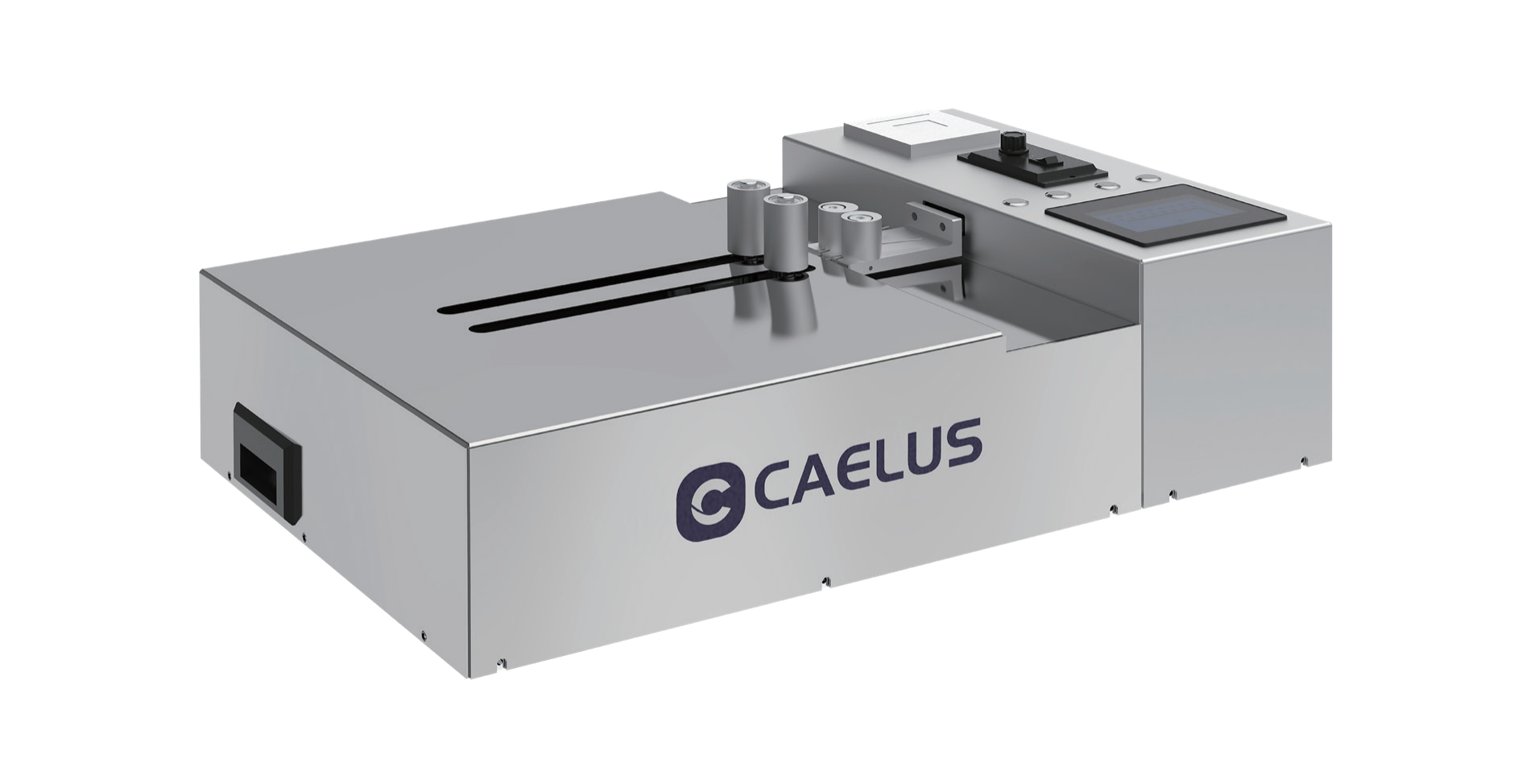
To answer "What is tensile strength and how is it tested?" we must delve into the scientific principles behind the testing.
Basic principles of tensile testing
The tensile testing process can be seen as an "interrogation" of the material's limits. By applying a gradually increasing tensile force to both ends of the material, the relationship between stress and strain is observed. The maximum force value recorded by the instrument at the moment of material fracture, after calculation, yields the tensile strength.
How a Tensile Strength Tester Works (Core Principle)
This is a key piece of equipment in laboratories and quality control workshops. A professional tensile strength tester typically consists of a high-precision load sensor, a drive system (motor or hydraulic), and control software.
During the test, the sample is fixed between the upper and lower clamps of the tensile strength tester. After the machine starts, the clamps separate at a constant speed, and the sensor captures the force changes in real time. For the furniture industry, the testing here is often more refined, measuring not only the base material itself but also the bonding strength of the adhesive joints.
Common Tensile Testing Standards
To ensure the universality of data worldwide, testing usually follows internationally recognized systems. Different organizations have developed corresponding guidelines for different materials, ensuring consistency in quality perception throughout the furniture manufacturing supply chain.
Table 1: Common Standards in Material Testing
|
Standard Organization |
Primary Region |
Application Focus |
|
ISO (International) |
Global |
General principles of tensile testing for materials |
|
ASTM International |
North America |
Standard test methods for plastics and composites |
|
CEN (European Standards) |
Europe |
Specifications for wood-based panels and boards |
|
National Standards (e.g., GB, JIS) |
Asia / Local Markets |
Regional quality control for furniture manufacturing |
These standards regulate the tensile speed, sample size, and environmental temperature and humidity of the tensile strength tester, ensuring consistency in quality perception throughout the furniture manufacturing supply chain.
Banding Test: A Key Tensile Test in Edge Banding Quality
In panel processing, general tensile testing is often refined into a more specific banding test.
What is a Banding Test?
A banding test is a specialized "health check" for edge banding quality. It primarily tests the peel strength between the edge banding and the panel. This is a special type of tensile test, focusing on evaluating the bonding performance of the adhesive (EVA, PUR, or laser edge banding adhesive layer). For this test, a specially configured edge tensile strength tester fixture is typically used.
Application of Banding Test in Edge Bander Process
The process parameters of the edge bander directly determine the results of the banding test. If the amount of adhesive is insufficient, resulting in insufficient bonding area, the tensile strength will naturally be low; if the pressure roller pressure is uneven, leading to uneven adhesive distribution, it will also cause fluctuations in the test data.
By regularly conducting banding tests, factories can calibrate the edge bander settings, such as adjusting the hot melt adhesive temperature or feeding speed, thereby forming a quality control loop.
How Intelligent Edge Banding Machines Improve Tensile Strength Performance?
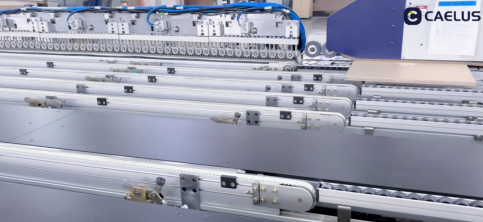
Intelligent Edge Banding Machine
With the popularization of Industry 4.0, passive testing is gradually shifting towards active control.
The Impact Mechanism of Intelligent Edge Banding Equipment on Tensile Strength
The new generation of intelligent edge banding machines not only performs the edge banding action, but also has a large number of built-in sensors. These devices can monitor the temperature and pressure of the adhesive system in real time, ensuring that every gram of adhesive performs optimally. This precise control directly improves the tensile strength performance of the finished product, far exceeding that of traditional equipment.
Advantages of Intelligent Fast Banding Machines in Stability
In scenarios where high production capacity is required, intelligent fast banding machines demonstrate remarkable capabilities. Traditional thinking suggests that the faster the speed, the more difficult it is to control quality, but intelligent high-speed models use algorithmic compensation to maintain the uniformity of the adhesive line and pressing force even at high speeds. This means that in large-scale continuous production, the consistency of tensile strength is ensured to an unprecedented degree.
The Value of Tensile Strength Testing in Panel Processing
Tensile strength testing is very important throughout the entire panel processing workflow; quality control should not be an afterthought.
Table 2: Quality Control Points in Panel Processing
|
Stage |
Inspection Focus |
Goal |
|
Raw Material |
Substrate Integrity |
Ensure internal bond strength matches requirements |
|
Edge Banding |
Adhesion Strength |
Verify glue line performance via banding test |
|
Drilling/Assembly |
Joint Stability |
Confirm holding power for hardware |
|
Final QA |
Overall Durability |
Simulate long-term stress using tensile strength tester |
Integrating tensile strength testers into various stages of the production line means that companies are upgrading from "manufacturing products" to "manufacturing standards."
How to Correctly Apply Tensile Strength Testing in Furniture Manufacturing?
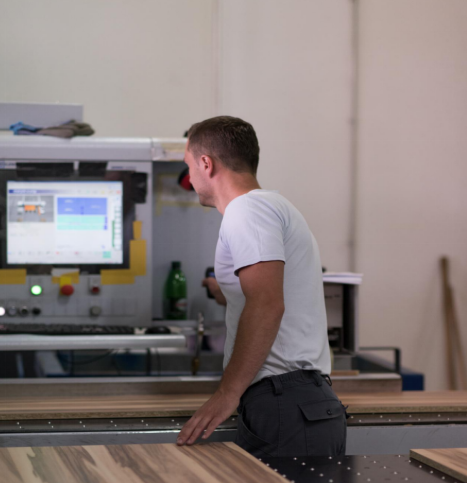
In the testing phase, equipping a high-precision edge tensile strength tester is essential for the edge banding process. Factories should establish standards, conducting a first-piece banding test before each production batch to ensure parameters are correct before starting the intelligent fast banding machine for mass production.
Caelus's edge tensile strength tester has the following excellent features:
- Variable speed adjustment to adapt to different testing schemes
- Dynamic curve display of actual tensile strength
- Automatic printing of test data for easy recording
- Stainless steel casing, beautiful and durable
FAQ
Q: What is tensile strength?
A: It is the ability of a material to withstand the maximum tensile force before breaking, and is a key physical indicator for measuring the quality of the bond between furniture panels and edge banding.
Q: How does a tensile strength tester work?
A: It works by clamping the sample and stretching it at a constant speed until the sample breaks, while a sensor records the changes in force during the process.
Q: What is the difference between a banding test and a regular tensile test?
A: A banding test is a specific application in furniture manufacturing, specifically used to test the bonding and peeling strength between the edge banding and the panel.
Q: Does an intelligent edge banding machine affect tensile strength?
A: Yes, it significantly improves it. Intelligent edge banding machines, through precise control of glue application and pressure, can produce more stable and higher bonding strength than manual adjustment.
Q: Is tensile strength testing necessary in furniture manufacturing?
A: It is very necessary. It is an essential means to prevent products from cracking and edge peeling during use, and to maintain a high-end brand image.
Conclusion: Why Tensile Strength is an Indispensable Indicator in Modern Furniture Manufacturing
Reviewing the entire text, we have not only answered "What is tensile strength and how is it tested," but also revealed its value in commercial competition. In today's highly homogenized panel processing industry, intrinsic physical properties have become the dividing line between high-end and low-end products.
Owning a high-performance intelligent edge banding machine is only the foundation; combining it with a scientific banding test process and advanced edge tensile strength tester detection methods can truly build an impregnable quality moat. For manufacturers committed to the global market, this is not just about testing data, but also about fulfilling their durability promises to customers.