

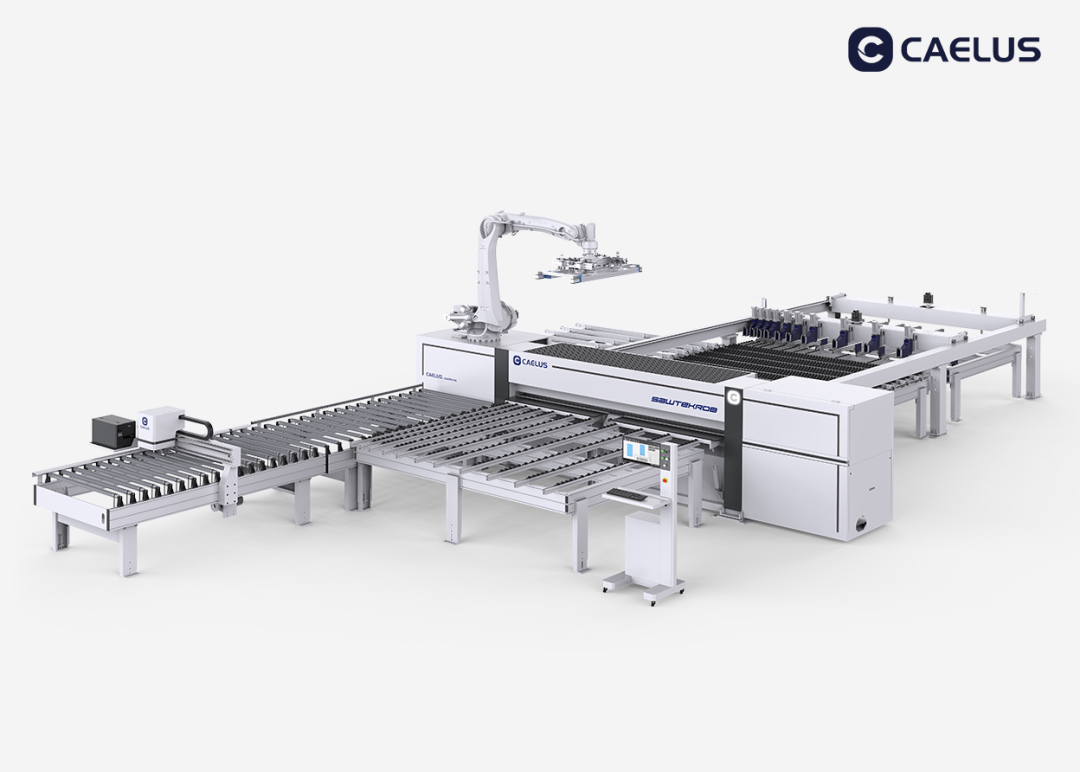
In the highly competitive field of furniture manufacturing, the cutting process is the first hurdle that determines production capacity and quality. This article provides an in-depth analysis of why traditional factories must upgrade to CNC Panel Saws, explores their crucial role in panel processing, and reveals how the Caelus Aurora and Pilot series are reshaping production efficiency through automation technology.
Why Must the Furniture Manufacturing Industry Upgrade Cutting Machines?
Furniture manufacturing is shifting from labor-reliant to tech-driven production. Old manual processing modes hinder business growth.
Customized orders feature diverse non-standard sizes, while customers demand faster delivery. Manual layout calculation and position adjustment waste time and easily cause errors, bringing adverse impacts on subsequent processing.
Soaring material costs call for higher board utilization. Conventional equipment fails to optimize cutting layouts and generates excessive waste. Advanced high-precision cutting systems have become essential for sustainable operation.
What is CNC Panel Saw?
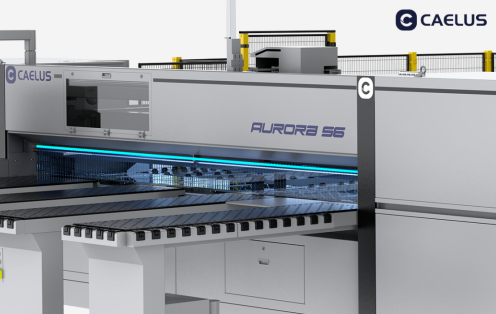
CNC panel saw integrates numerical control and precision machinery. It runs fully automatically via preset programs, controlling saw travel, blade lifting and robotic positioning without manual pushing.
The built-in CNC system acts as the core control unit, ensuring positioning accuracy up to micron level. Workers only need to feed materials and input data or scan codes. The machine automatically finishes clamping, cutting, anti-chip processing and unloading.
Different from conventional saws, it supports digital data connection and serves as an efficient execution terminal for digital workshops.
Main Applications of CNC Panel Saws in Furniture Manufacturing
Panel saws run through the whole panel furniture production. Precise cutting serves as the initial process for cabinets, wardrobes and office furniture.
CNC panel saws fit multiple materials well. It delivers clean cuts on particleboard, MDF and plywood. Dual-blade design effectively avoids edge chipping on melamine and high-gloss acrylic boards.
It also processes honeycomb panels, compact laminates and plastic composites. The equipment guarantees uniform sizes and high dimensional precision for quality furniture production.
Why Do Furniture Factories Need to Upgrade from Traditional Panel Saws to CNC Panel Saws?
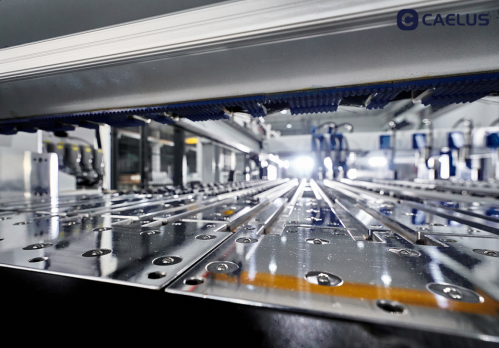
Steel countertop of CNC Panel Saws
Improved Cutting Accuracy, Reduced Rework and Material Waste
Cutting precision creates tangible economic benefits. Manual cutting suffers visual and physical errors, failing stable mass production. High-rigidity frames and precision sensors equip CNC panel saws with steady long-term accuracy. It avoids rework and effectively cuts waste.
Boosted productivity suits mass and custom production. Simultaneous cutting and fast return design raise efficiency 3 to 5 times higher than old devices. Automatic positioning enables quick order switching with no idle time.
Automation lessens labor dependence and eases staff shortage. The equipment has low operation requirements. Basic training qualifies workers for supervision. Standardized workflow keeps stable quality amid personnel changes.
Analysis of the Core Advantages of Automated Panel Saws
Automatic Loading and Unloading and Intelligent Layout Optimization
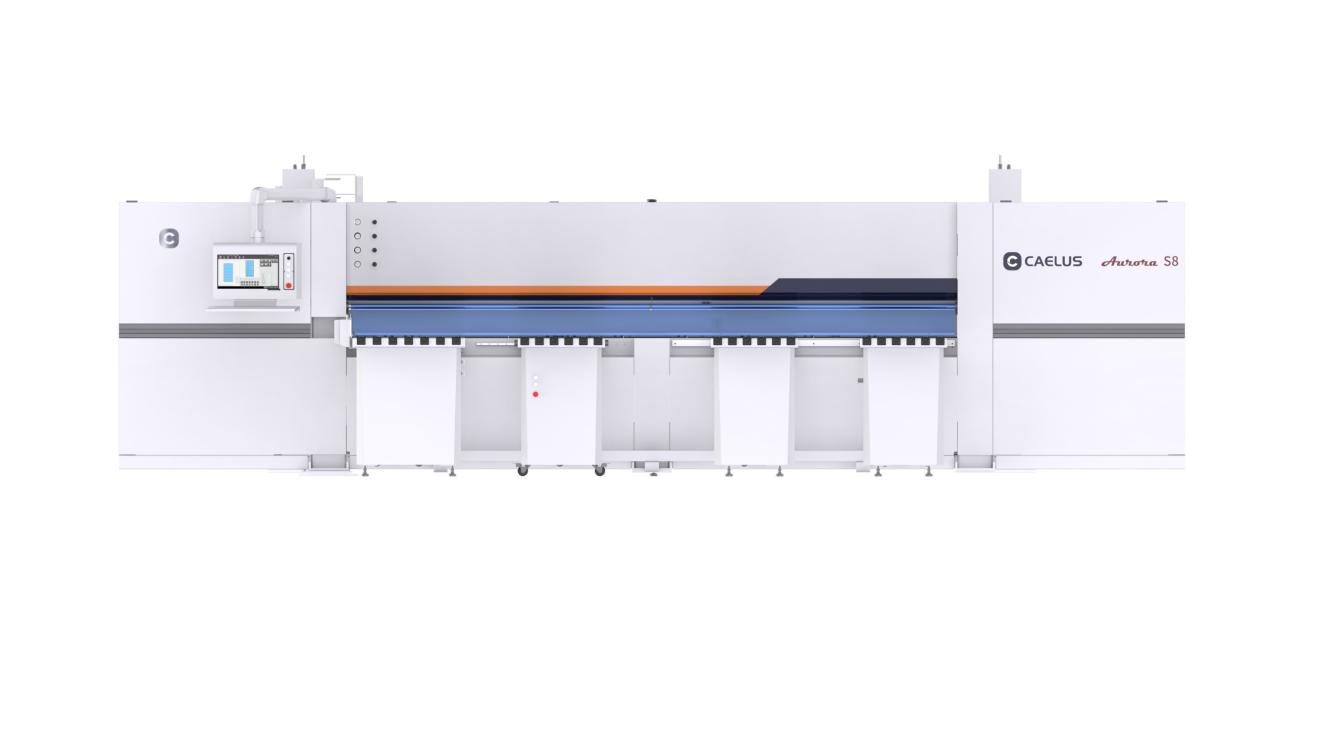
Modern automated Panel Saws often no longer operate independently, but are connected to automatic loading platforms or intelligent warehousing systems. For example, Caelus's Aurora S8 rear-loading model supports automatic feeding and positioning of large quantities of panels, completely freeing workers from manual labor. In material handling, automation reduces the risk of panel damage caused by manual handling and significantly improves the overall production cycle.
Software-Driven Cutting Optimization
Hardware determines the lower limit of cutting, while software determines the upper limit. The built-in optimization software can instantly calculate the optimal layout plan based on order requirements, maximizing panel utilization. The system automatically prioritizes remnant management, marking and storing large remnants in a database for future use, a cost advantage that manual layout cannot match.
Long-Term Value of CNC Panel Saws for Furniture Manufacturing
Equipment upgrade is a long-term brand investment. Stable delivery and low processing errors help win client trust and elevate brand reputation.
CNC panel saws pave the way for manufacturing automation. It supports data connection with edge banders, six-sided drilling machines and MES systems, building solid data support for fully unmanned smart factories.
Applications of CNC Panel Saws in Different Furniture Production Models
Factories of different sizes and positions have different machine needs. Caelus provides a full range of solutions from entry-level to top-of-the-line:
1. Small and Medium-Sized Factories and Standardized Production Lines: Pilot Series
For factories undergoing transformation, the Pilot S3 and Pilot S5 are ideal entry points.
The Pilot S3, as an entry-level benchmark, is equipped with an intelligent sawing control system and high-density clamps, achieving a leap from manual to CNC control with extremely high cost-effectiveness. The Pilot S5 further upgrades the servo-driven lifting main saw and linear-driven saw carriage, and the addition of an independent dual-push system makes it even more versatile when handling mixed orders.
2. High-End Customization and Large-Scale Manufacturing: Aurora Series
Facing massive orders and extreme precision requirements, the Aurora series demonstrates industrial-grade capabilities.
The Aurora S6 introduces linear motor drive technology and laser deformation detection, combined with an intelligent labeling system, perfectly suited for highly automated production lines.
The Aurora S8 is designed for high productivity, with a rear-mounted structure supporting double-layer stacking assistance, making it the flagship choice for those seeking ultimate cost-effectiveness and output.
3. Pioneer of Intelligent Manufacturing: Bespoke Flexible Unit
For companies aiming to create an Industry 4.0 benchmark, the SawTekRob 5 Flexible Cutting Cell is no longer just a simple saw, but a flexible cutting center integrating robotic automatic handling, flipping, and multi-process integration, representing the future of panel processing.
Table 1: Selection Guide for Caelus Panel Saw Series
|
eries |
Ideal Production Mode |
Key Technology |
Automation Level |
|
Pilot S3/S5 |
SME / Batch Processing |
Servo Control, Intelligent Clamps |
Standard |
|
Aurora S6/S8 |
Mass Customization / High Volume |
Linear Motor, Laser Detection, Auto Labeling |
High |
|
SawTekRob 5 |
Unmanned / Smart Factory |
Robotics Integration, Flexible Cell |
Fully Automated |
Key Factors to Consider When Upgrading CNC Panel Saws
When selecting a machine, factory owners should consider the following dimensions:
Cutting Size and Production Capacity Matching: Manufacturers should confirm the maximum panel size (such as the common 4x8 feet or large panels) and daily cutting volume to avoid "underpowering" or overcapacity.
Relationship between Automation Level and Factory Scale: The higher the degree of machine automation, the higher the requirements for the surrounding logistics system. Automated Panel Saws require corresponding dust removal, air supply, and panel handling space.
Connectivity with Downstream Panel Processing Machines: Excellent CNC Panel Saws should have open data interfaces to seamlessly transmit cutting information (such as QR codes) to subsequent edge banding machines and CNC drills, enabling a smooth information flow.
Contact Caelus to get the most suitable furniture production solution for your factory, production, and specific needs.
Table 2: Traditional vs. CNC Panel Saw Operational Comparison
|
Feature |
Traditional Panel Saw |
CNC Panel Saws (e.g., Caelus Aurora) |
|
Cutting Accuracy |
0.5mm - 1.0mm (Operator Dependent) |
0.1mm (Consistent) |
|
Optimization |
Manual Calculation |
Software Driven (High Yield) |
|
Labor Requirement |
Skilled Carpenters Required |
General Operator (Low Skill Barrier) |
|
Data Integration |
None |
Full MES/ERP Connectivity |
|
Safety |
High Risk of Injury |
Fully Enclosed, Sensor Protected |
FAQ
Q1:What are CNC Panel Saws?
They are automated cutting machines that control the movement of the saw blade and the positioning of the panel through a computer numerical control system, significantly improving cutting accuracy and efficiency.
Q2:What are the advantages of CNC Panel Saws compared to traditional Panel Saws?
Key advantages include micron-level cutting precision, production speeds several times faster than manual methods, higher material utilization, and reduced reliance on operator skills.
Q3:Are automated Panel Saws suitable for small and medium-sized furniture factories?
Absolutely. Entry-level models like the Pilot series can help small and medium-sized factories reduce waste costs and improve product quality, quickly recouping their investment.
Q4:What are the uses of Panel Saws in furniture manufacturing?
They are mainly used for cutting base materials such as particleboard, MDF, and plywood, and are widely used in the production of cabinets, wardrobes, office furniture, and door panels.
Q5:Do CNC Panel Saws help reduce production costs?
Yes. Although the initial investment is higher, the long-term operating costs are significantly lower than traditional machines due to reduced waste, lower labor costs, and elimination of rework.
Conclusion: Why CNC Panel Saws are the inevitable choice for modern furniture manufacturing
From the precise entry-level Pilot series to the high-efficiency output of the Aurora series, and the robotic collaboration of SawTekRob, Caelus offers more than just machines; it provides future-oriented productivity tools.
In the field of furniture manufacturing, upgrading to CNC Panel Saws signifies a shift from a manual workshop mindset to a modern industrial mindset. It solves the most fundamental and critical cutting problems in panel processing, paving the way for subsequent high-quality production. For manufacturers who aspire to be invincible in the market, embracing automated Panel Saws is the only way to a future of efficiency, intelligence, and high profits.